


Converging Evidence Report - Princeton Phenotypes Study
Princeton Converging Evidence Report Card
This report evaluates whether Princeton’s findings reflect independent derivation or uncredited use. Scoring is based on temporal precedence, dissemination gap, publication timeline, exposure likelihood, structural specificity, and institutional response.
Exclusivity Principle Comparison
Side-by-side comparison of Princeton’s published autism subtype framework and Kitzerow’s earlier systems-level cascade model.
Princeton
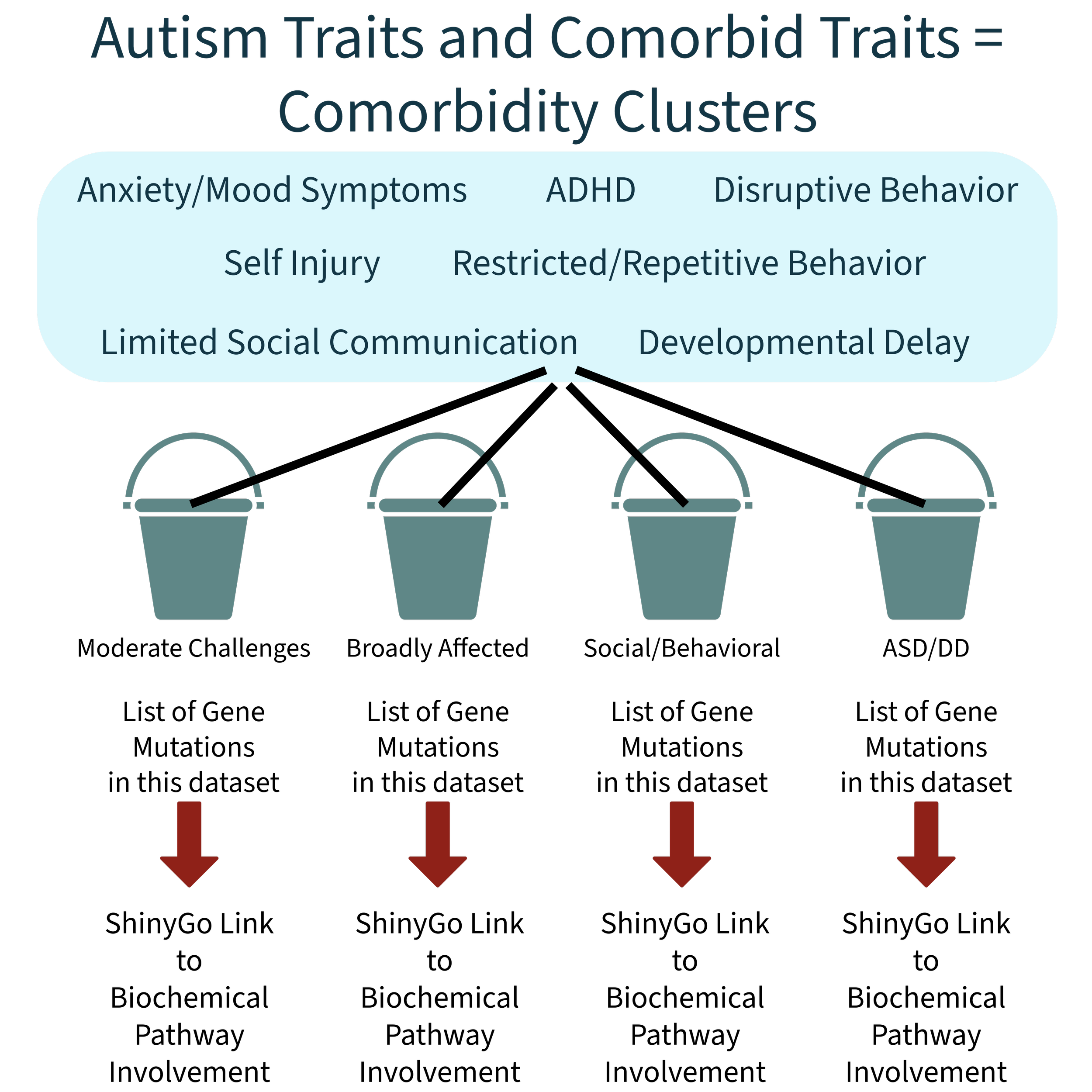
Tested whether distinct genetic mutation groups produce different biological pathway changes that organize autism traits and comorbidities into subtype clusters.
- Used existing SPARK autism datasets. They did not collect novel data.
- Ran code with the existing data using bioinformatics tools, such as ShinyGO, for instantaneous coded results.
- Peer-review feedback described the interpretation as post hoc logic.
Kitzerow
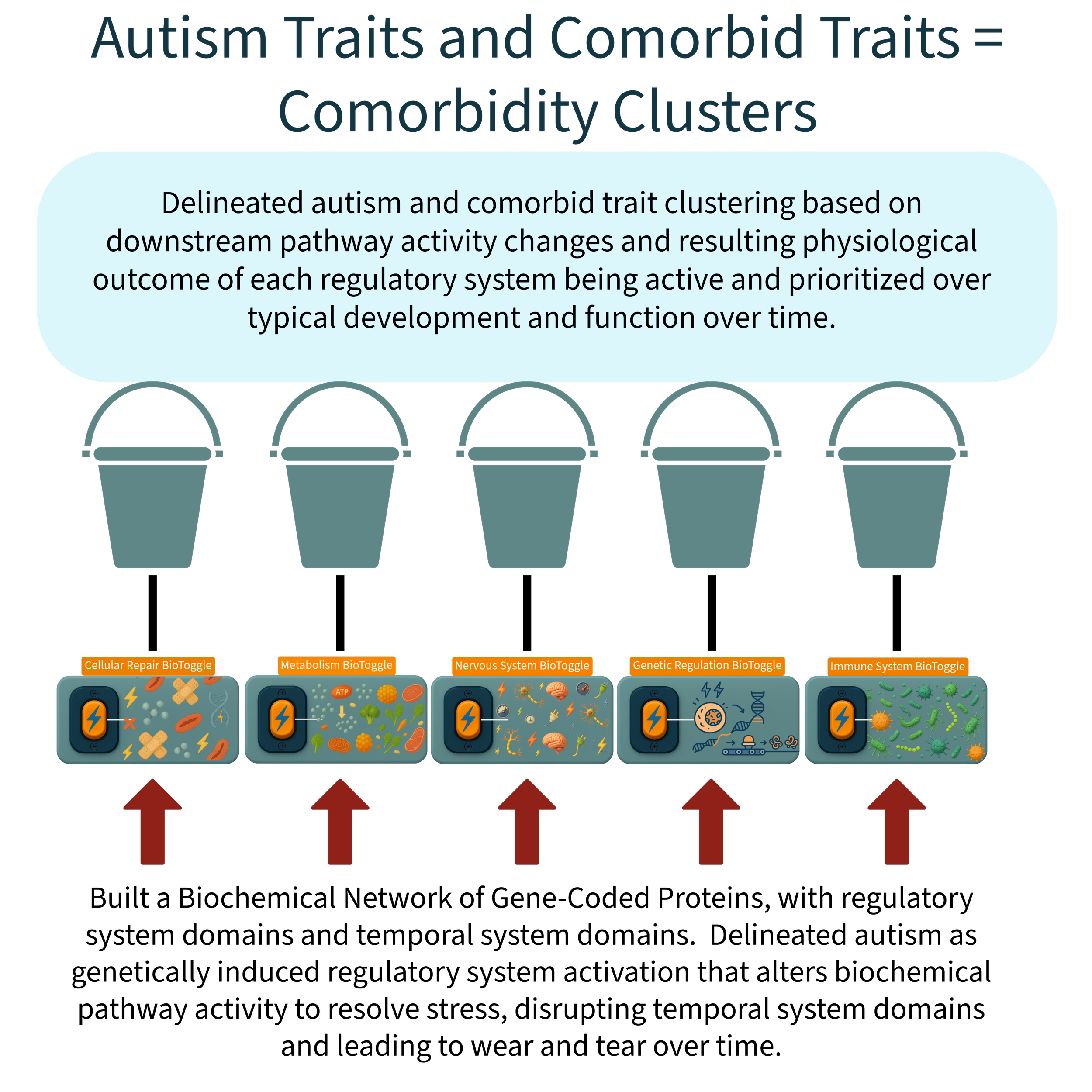
Tested whether gene-coded protein dysregulation could identify biologically constrained pathway shifts that predict clustered autism traits and comorbidities.
- Built the biochemical network of gene coded proteins by hand on adobe, using raw data from Uniprot. This took thousands of hours.
- Comparative analysis of autism biomarkers against the biochemical network.
- Biologically constrained points of dysregulation became the cascade.
Executive Summary
Condensed readout of the major evaluative patterns reflected in this report.
Kitzerow’s public articulation predates Princeton’s publication by about 26 months.
GitHub first commit to journal receipt is approximately 62 days.
The overlap is at the level of hypothesis sequence and causal structure rather than topic similarity alone.
Princeton issued a fast determination without substantively engaging the structural evidence.
Documented Record
Chronological record of Kitzerow’s public articulation and Princeton’s visible study timeline.
Side-by-Side Timestamp Evidence
Documented public timestamps showing Kitzerow’s prior articulation beside Princeton’s later language and publication record.
Kitzerow Publicly Released the Model First

Kitzerow publicly introduced the model by identifying biochemical pathway shifting in autism and comorbid trait clustering before Princeton’s visible study timeline.
Princeton Later Claimed a Similar Novel Framing
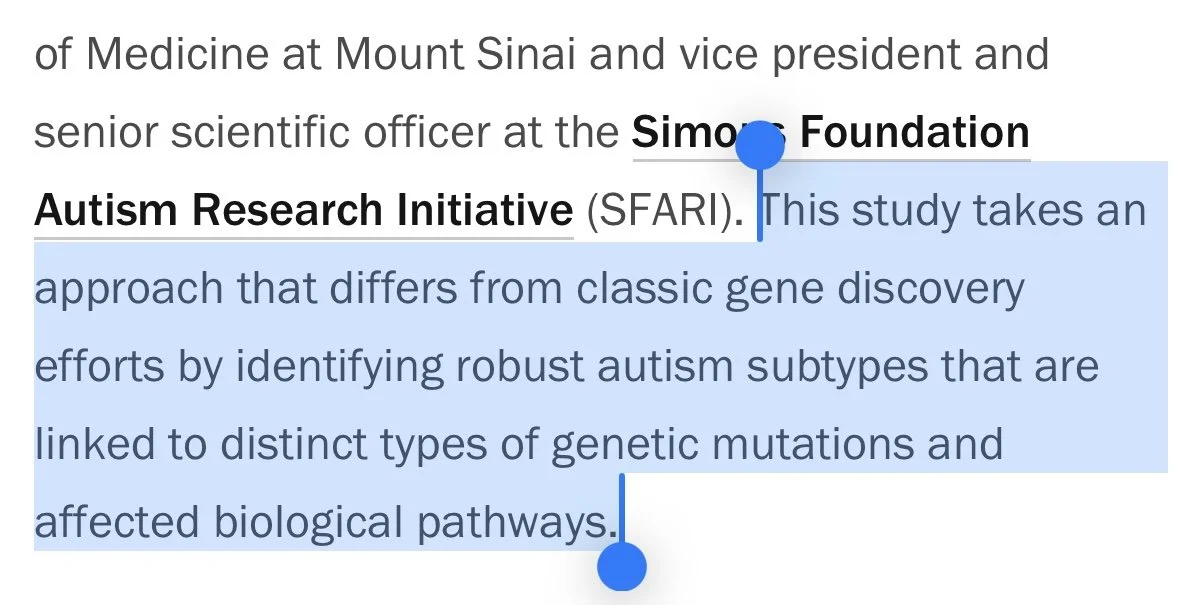
Princeton described the novel aspect of its work as identifying autism subtypes of clustered autism and comorbid traits linked to distinct genetic mutations and affected biological pathways.
Kitzerow Named the Jigsaw Puzzle Methodology

Kitzerow publicly framed her discovery method as the Jigsaw Puzzle Methodology before Princeton’s later public analogy.
Princeton Later Used Jigsaw Puzzle Language

Princeton described the discovery process as like solving a jigsaw puzzle, language that directly parallels Kitzerow’s named Jigsaw Puzzle Methodology.
Kitzerow Linked Gene Mutations to Pathway Shifts

Kitzerow connected genetic mutations to biochemical pathway shifts, regulatory system categories, phenotype variation, and autism comorbidity clustering before Princeton’s publication.
Princeton Tested the Same Core Architecture

Princeton’s preprint and publication used class-specific gene subsets to test distinct biological pathways and processes across autism classes. They stated this exact hypothesis in the preprint and removed it from the published version.
Score Interpretation
Lower scores indicate higher concern. Higher scores indicate stronger evidence for independence.
Detailed Scoring Table
Six-factor report card formatted as a formal evaluation sheet.
Temporal Precedence
Framework predates study
Value: 3 dots — framework predates study.
Why this score: Kitzerow publicly articulated the exclusivity principle on May 8, 2023, while Princeton’s earliest visible development marker does not appear until May 24, 2024.
Dissemination Gap
Time from framework release to study publication
Value: 1 dot — dissemination gap greater than 12 months.
Why this score: Time from Kitzerow’s framework release on May 8, 2023 to Princeton’s publication on July 9, 2025 is approximately 793 days, or about 26 months.
Publication Timeline
Study start to journal submission
Value: 1 dot — publication timeline under 12 months.
Why this score: GitHub first commit on May 24, 2024 to journal received on July 25, 2024 is approximately 62 days, or just over 2 months.
Exposure Likelihood
Probability of access to the framework
Value: 3 dots — public exposure possible, no direct documented contact.
Why this score: The framework was public across Kimberly Kitzerow’s websites and published book beginning in 2023, but no direct prepublication contact is documented in this record.
Structural Specificity
Overlap in mechanism, structure, or conclusions
Value: 1 dot — same hypothesis or conclusion tested without independent derivation.
Why this score: Both frameworks follow the same mechanistic chain: categories of gene mutations → distinct biochemical pathway shifts → predictable clustering of autism and comorbid traits.
Institutional Response
Response after notification and publication changes
Value: 1 dot — dismissive response pattern.
Why this score: Princeton sent an electronic, secured-server letter the day after Christmas stating they had self-investigated and found no wrongdoing. The letter was set to expire within seven days whether opened or not, and no further engagement was permitted.
Final Interpretation
Bottom-line readout of the overall score pattern.
Interpretation
Princeton’s score pattern concentrates toward the lower end because the dissemination gap is long, the publication timeline is short, the structural overlap is highly specific, and the institutional response appears dismissive rather than collaborative.
Studies Referenced in This Framework
The following studies correspond to the mechanisms mapped in the framework and are provided for direct review and comparison.
Studies are listed in relation to the framework components they correspond to.
- ESC models of autism with copy-number variations reveal cell-type-specific translational vulnerability View Study Here
- Tetrahydrobiopterin and Autism Spectrum Disorder: A Systematic Review of a Promising Therapeutic Pathway View Study Here
- Reticular thalamic hyperexcitability drives autism spectrum disorder behaviors in the Cntnap2 model of autism View Study Here
- Imaging Metabotropic Glutamate Receptor 5 and Excitatory Inhibitory Imbalance in Autism View Study Here
- Nitric Oxide-Mediated S-Nitrosylation of TSC2 Drives mTOR Dysregulation across Autism Models View Study Here
- AI-based autism identification from hyperspectral imaging detection of oxidative stress in pediatric red blood cells View Study Here
- Decomposition of phenotypic heterogeneity in autism reveals underlying genetic programs View Study Here
- A 3-hit metabolic signaling model for the core symptoms of autism spectrum disorder View Study Here