


Neurodivergent Biochemistry
Neurodivergent Biochemistry
“Neurodivergent biochemistry is fundamentally about epigenetics. The stress response systems toggle the body between different states that turn certain genes and biological systems on or off.” - Kimberly Kitzerow
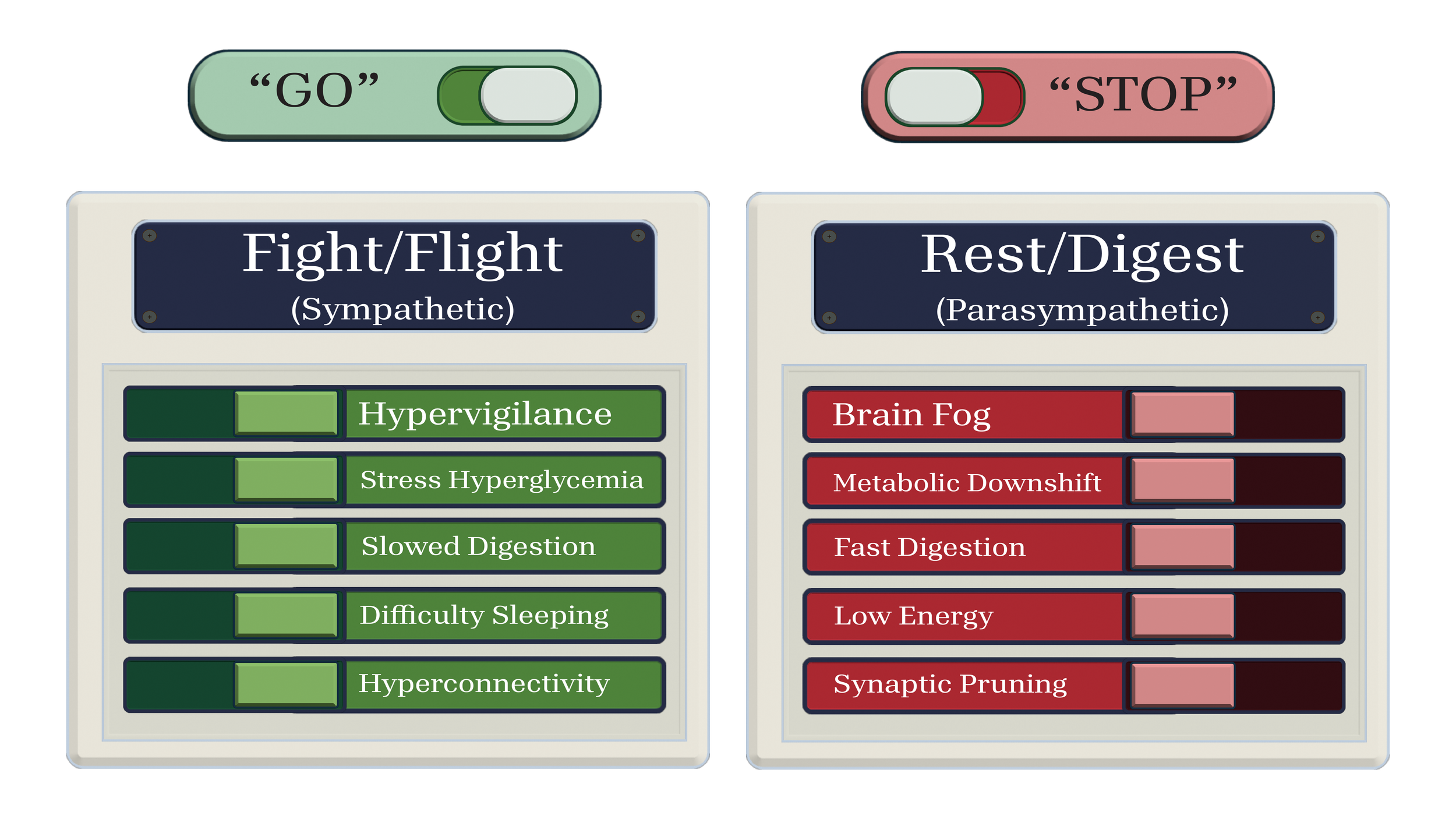
The nervous system helps the body maintain balance by moving between two main states that turn different systems on and off. In each state, different genes are turned on or off, determining which functions are active at that time. These shifts between states are called toggling, and the regulatory system domains that manage these shifts are called BioToggles.
What is Novel About Neurodivergent Biochemistry?
There are other neurodivergent pathology models that revolve around cellular stress, but none that center around how the body reallocates proteins as limited resources under stress based on regulatory system domains, and how those reallocations manifest as physiological traits over time.
How Stress States Influence Development and Body Function
The state the body is in determines which biological functions are prioritized or paused. The longer the body stays in a stress state, the more it can affect development over time. When stress states remain active, some aspects of typical development and normal body function may be deprioritized.
Doesn’t Everyone Experience Stress States?
Everyone’s body moves between stress states at times. However, due to genetic and epigenetic factors, neurodivergent individuals are more likely to become stuck in “go” or “stop” states for longer periods.
Neurodivergent Biochemistry and Development
In Neurodivergent Biochemistry, the state the body is in determines which biological functions are prioritized or paused. The longer the body remains in a stress state, the more it can affect development over time. When these states stay active, some aspects of typical development and normal body function may be deprioritized or dysregulated.
Neurodivergent Biochemistry and Behavior
Ongoing stress-response activation can disrupt neurodevelopment. Neural networks hold the information for how to perform skills and behaviors, which is why many treatment approaches focus on behavior.
However, the historically recommended approaches such as ABA often do not account for autonomic behaviors driven by stress-response activation, even though these make up a large portion of neurodivergent behaviors.
NeuroToggle and Neurodivergent Biochemistry
NeuroToggle was created by Kimberly Kitzerow to intentionally build and strengthen the neural connections that store the information for skills and behaviors during development, even when stress-response systems are active.
-
Neurodivergence can be understood as a prolonged state of allostasis, where the body continuously works to maintain balance under stress. Over time, this stress response can alter physiological function and development.
In the Neurodivergent Biochemistry framework, variation in phenotypes depends on several key variables:
Which BioToggle is active
How long the BioToggle remains active
The developmental stage when activation occurs
Which BioDial timing processes are affected
Which biochemical pathway is disrupted
The downstream physiological effects of the dysregulation
Each of these factors influences how stress responses manifest in the body.
-
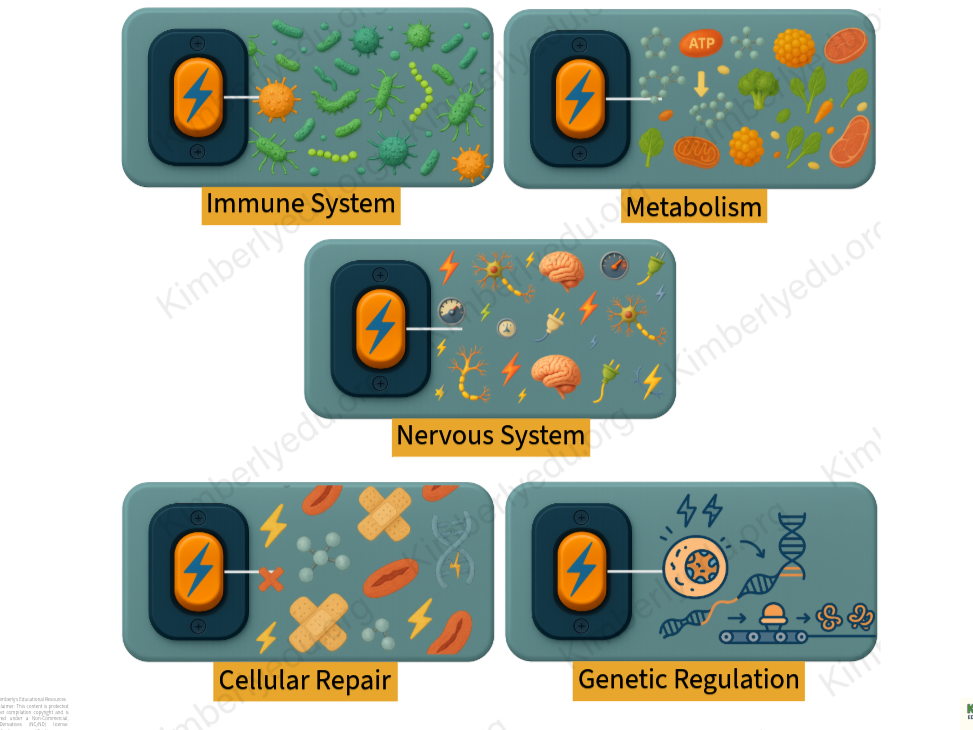
BioToggles are regulatory system domains that help maintain biochemical balance in the body. The five BioToggles identified in the framework are:
Immune system – protects against pathogens such as viruses and bacteria
Cellular repair – responds to physical damage like wounds or tissue injury
Metabolism – maintains energy and nutrient balance
Nervous system – protects neurological stability
Genetic regulation – maintains genomic stability and epigenetic control
Each BioToggle monitors its own baseline while interacting with the others through feedback loops.
-
Description How long a BioToggle remains active influences the physiological impact.
Situationally flipped – temporarily activated in response to a stressor and able to return to baseline once the stress resolves
Chronically stuck – remains active due to prolonged stress exposure, gene mutations within allostatic resolution proteins, or disrupted feedback regulation
Genetically locked – permanently altered due to mutations affecting regulatory proteins, or those that create conditions to create regulatory system set point deviations.
Longer activation increases the likelihood of long-term physiological changes and wear and tear from allostatic overload.
-
The developmental stage when a BioToggle becomes activated can influence outcomes. Stress responses during early development can affect physiological systems differently than those within puberty or those occurring later in life.
-
BioDials represent temporal time-regulated biological cycles that influence protein synthesis and physiological processes. These include:
Circadian rhythms – daily biological cycles
Circannual cycles – seasonal physiological changes
Development – progression from childhood through adulthood
Aging and repair – ongoing tissue maintenance and regeneration
These timing systems affect how stress responses influence the body over time.
-
Different durations and conditions of BioToggle activation alters the activity of different biochemical pathways. When a pathway is disrupted, it can affect specific physiological systems, which contributes to variation in traits and health outcomes.
-
Changes in regulatory systems and biochemical pathways can lead to different physiological traits or conditions over time that are biochemically predictable. These downstream effects help explain the wide range of phenotypes seen in neurodivergent individuals.
Background Knowledge and Framework Breakdowns
-
Required Background Knowledge
Central Dogma of Molecular Biology Expanded
Each gene holds the instructions for making one protein (and different isoforms, or "flavors," of it) that are "made to order" for the conditions needed.
What are Proteins?
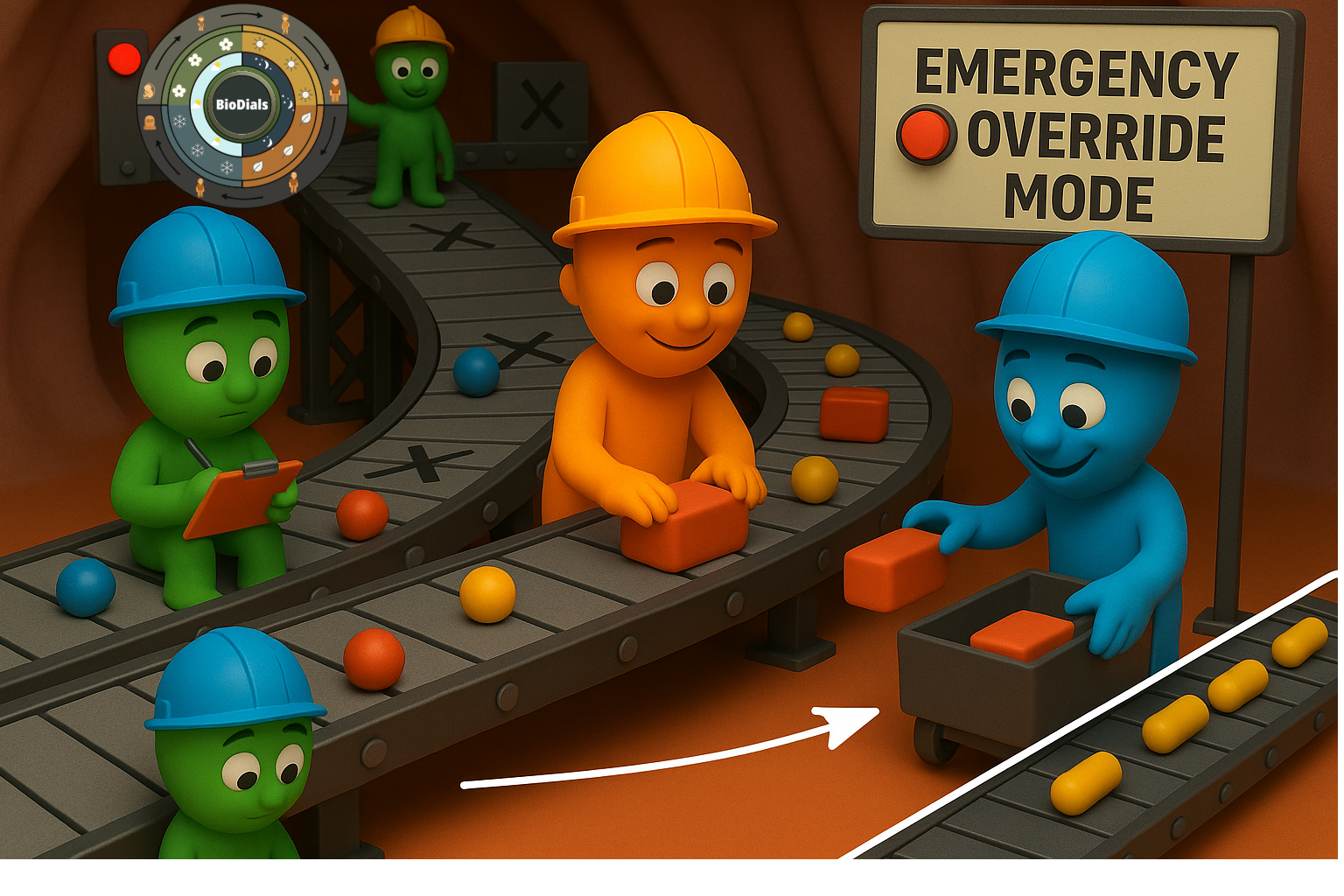
Think of the body's functional blueprint, its gene-coded biochemical network, as a complex conveyor belt system. Each protein is a worker carrying out a specific job. Every single function in the body is managed by one of these workers.
BioDials and the Kinetic Flow-State (Dynamic Equilibrium)
Typically, there is a steady kinetic flow of proteins being created to keep the body typically developing and typically functioning.
This flow state is regulated by the BioDials through daily, seasonal, developmental, and age-related timing rhythms.
Stress and Epigenetics
Cellular stress interrupts this flow, flipping BioToggles and activating "turbo mode" to restore baseline. This adaptive state is called allostasis. In allostasis, proteins needed for the stress response are turned on, I call these allostatic proteins. While the creation of other proteins are shut down to conserve resources and protect certain vital functions. This process (epigenetics) helps us survive by shifting into "emergency mode." | call these shifts Epigenetic Redox-Sensitive Shunts.
-
The BioToggles: How They Were Identified and How Each Functions as a Regulatory System
The BioToggles are the five regulatory systems that emerged when I mapped raw UniProt protein induction patterns and compared them with the structural components of a regulatory system described in the NCBI Bookshelf section on homeostasis. When I cross indexed proteins under different categories of stress exposures, the same clusters appeared consistently.
Each cluster functioned as a complete regulatory system with its own set point, sensors, error detector, controllers, and effectors.
1. Set Point: the target range for physiological parameters.
2. Sensor: Detects deviations from the set point.
3. Error Detector: compares the sensor data to the set point.
4. Controller: Processes information and signals effectors.
5. Effector: Executes corrective actions to restore the set point back to baseline.
These clusters became the BioToggles.
They describe categorical inductions that trigger allostasis and how epigenetic redox-sensitive protein shunts act as effectors to restore baseline.
BioToggle 1: Immune System
How it emerged
Immune related proteins consistently induced together across pathways involving antigen recognition, inflammatory signaling, and redox linked immune activity.Activation inputs: pathogens, inflammatory cues, antigen exposure, immune load
BioToggle 2: Metabolites (plus or minus)
How it emerged
Proteins involved in metabolic balance, nutrient sensing, substrate availability, and redox regulated metabolic pathways formed a unified induction pattern.Activation inputs: low metabolite levels, high metabolite levels, nutrient imbalance, metabolic stress
BioToggle 3: Cellular Repair
How it emerged
Proteins responsible for structural repair, debris clearance, membrane rebuilding, lysosomal activity, and mechanical strain clustered together as a coherent repair domain.Activation inputs: mechanical damage, cellular strain, structural compromise, debris accumulation
BioToggle 4: Nervous System
How it emerged
Proteins regulating neurotransmitters, synaptic balance, sensory processing, and neural redox shifts formed a unified neural stress response cluster.Activation inputs: psychological stress, sensory overload, emotional demand, neuroinflammatory cues
BioToggle 5: Genetic Regulation
How it emerged
This toggle formed from proteins involved in circadian rhythm coordination, CLOCK and BMAL timing pathways, developmental timing signals, and regulation of protein synthesis. These induction patterns grouped together due to their shared timing based regulatory function.Activation inputs: circadian timing shifts, increased need for protein synthesis, timing mismatches, sustained physiological demand
-

The Origin of the BioDials
The BioDials emerged when I integrated circadian rhythm genes, developmental timing signals, and protein synthesis regulators into the biochemical network. When CLOCK, BMAL, and other circadian regulators were mapped alongside development and repair related genes, their induction patterns behaved differently from the categorical stress responses seen in the BioToggles. Instead of activating because of a stress input, they activated based on when the body needed to perform specific physiological or developmental tasks.
This showed that the system included a second regulatory layer that was not categorical but temporal.
The BioToggles regulate what the body does under different categories of stress.
The BioDials regulate when the body carries out essential processes.As I incorporated more timing related pathways, it became clear that these genes governed:
• circadian rhythm
• circannual cycles
• development
• age regulated processesThese processes operated as repeating cycles rather than categorical stress responses. Their activity rose and fell according to timing cues, developmental stage, and seasonal patterns. This temporal architecture revealed a second layer of regulation in the system, which became the BioDials.
The BioDials represent the body’s timing based control mechanisms that coordinate when physiological, developmental, and synthesis related processes should occur.