Change Petition to Test Speech Mechanisms in Nonverbal Individuals
Research has shown that facial muscle differences exist in nonverbal individuals, but what has never been systematically tested is whether the nerves that control these speech muscles are functioning. When there is a complete lack of ability to see or hear, we test:
The optic nerve for vision
The auditory nerve for hearing
Yet for speech, the essential nerves that make fine tuning sound into words possible have never been assessed in those who cannot speak. It’s time for that to change.
My Nonverbal Daughter: Going From Silence to Speech
My daughter was diagnosed with nonverbal autism. She was very aggressive due to trapped cognizance. Every professional I turned to offered a strategy. I tried all of them. But none addressed what was really going on inside her brain:
❌ PT helped her move, not learn
❌ OT built skills, not circuits
❌ ABA managed behavior, not her nervous system
❌ Supplements offered hope—but nutrient sensitive regulatory proteins make it an Epigenetic BioToggle, and the impact of oversupplmentation on allostatic overload is under researched.✅ NeuroToggle: Rewiring Through Education
NeuroToggle is a neuroplasticity-based instructional framework that teaches the brain how to grow connections, increasing the opportunity for meaningful learning, across motor, sensory, cognitive, emotional, and regulatory systems.
It works by guiding the nervous system to build, expand, strengthen, and time neural circuits, the same way physical therapy supports muscle coordination, but applied to the brain’s broader learning architecture.
NeuroToggle was built for my daughter with neurodivergence in mind, but its design benefits all learners. It’s grounded in the science of how learning and memory are formed, making it applicable to anyone seeking instruction that aligns with how the brain actually develops.
Taking My Daughter From Silence to Speech
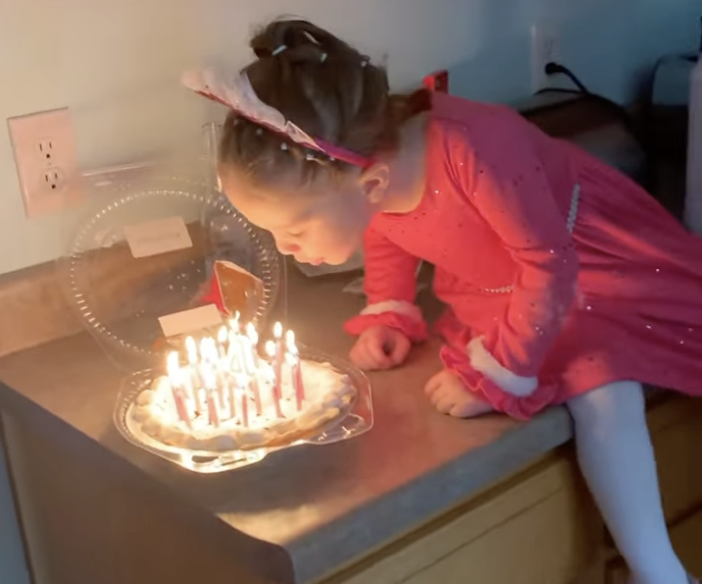
My daughter was diagnosed with Nonverbal Autism. She was enrolled in the Children’s Long Term Support Plan (CLTS) in our state (Wisconsin), which the child must qualify for institutionalization to qualify for. On her 4th birthday she was unable to blow out a candle on her birthday cake and I realized in that moment that the comorbidities are physiologically linked to autism. Not being able to blow out a candle was a physical impairment that likely impacted her ability to speak. This made nonverbality a physiological comorbidity. This was supported by a plethora of research indicating facial muscle oddities in autism research.
Her BCBA told me that she would never have cognizant thought. I disagreed. She sent me the title of a book to try and convince me otherwise. So, I emailed the man who wrote the book. I explained that I believed the aggression in nonverbal autistics was a sign of trapped cognizance. He said that was not possible without an FBA to determine the causal reason. In that moment I realized that communication was not considered within the 4 functions of behavior, later realizing that autonomic behaviors (which are involuntary) also are not. This is when I began creating my NeuroToggle Neuroplasticity framework to help her with the physical comorbidity of nonverbality that I had observed as being linked to facial muscle/nerve oddities. It worked. She became verbal, conversational, and was disenrolled from CLTS, as she was considered no longer functionally eligible for services.
The Silence
My daughter, Kylie, was diagnosed with nonverbal autism and enrolled in our state’s disability programs (CLTS and Katie Beckett). At age 5, she had almost no functional receptive or expressive language. Please note that this is not advice; it’s simply our journey. Click HERE for a breakdown of our story with the science, and HERE for a slideshow of what I did to help Kylie with videos of her as she progresses.
Beyond Words: The Journey from Silence to Speech
If you are curious about what the entire journey of taking Kylie from Silence to Speech was like, I have a memoir. You can find it on Amazon through the link below.


Realizing Kylie Couldn’t Blow Out a Candle
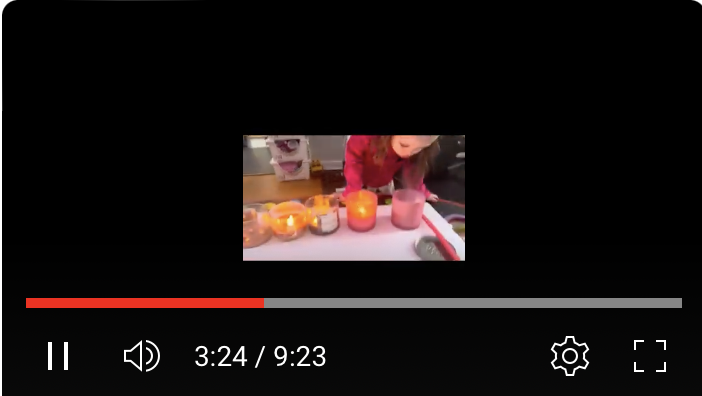
At four years old, Kylie was completely nonverbal, unable to imitate actions or vocalizations, and unresponsive to verbal communication. The most eye-opening moment came on October 22, 2020, at her 4th birthday party, when Kylie couldn't blow out a candle. It was then I realized that the physical parts involved in speech were contributing to her challenges. How could I expect her to speak if she couldn’t even blow out a candle? This realization marked a turning point in our journey. This is NOT medical advice, it is the story of how I took my daughter from silence to speech. Run any new changes in medical care, routine, or education past your child’s medical/IEP team.
Motor Skill Exercises
We spent extensive time working on exercises to strengthen the muscles (motor neurons) that produce speech. These included blowing out candles, using spinwheels, blowing bubbles, and blowing up balloons. These activities helped build up the muscles required for articulation and breath control.
Neuroplasticity Strategies
In 2020, when Kylie couldn’t blow out the candle, I realized autism and the comorbidities were physiologically linked. That nonverbality was a separate comorbidity with a physiological origin. After researching further, I began to notice facial muscle oddities and realized it must link back to the motor neurons that are connected to the corticobulbar tract in the brain. I then began developed and implemented a neuroplasticity based framework that I now call NeuroToggle. NeuroToggle® is an instructional framework that merges neuroscience with time-tested pedagogy. Rather than targeting specific skill deficits, it focuses on optimizing the conditions that make learning and retention possible. NeuroToggle™ emphasizes how we structure instruction, not just what we teach. The goal is to align educational practice with how neural connections change in response to experience.
I wrote two books on NeuroToggle. The 1st edition, which can be found HERE, focuses on why neuroplasticity based instruction strategies are relevant for neurodivergent learners. The 2nd edition, which can be found HERE, focuses on how to build, strengthen, time, and expand connections through targeted strategies. This one is the guidebook. It does NOT target specific skills. Every skill is a neural connection that can be refined. It is teaching pedagogy to meet the conditions that must be met for those connections to occur overall.
Muscle Vibration Therapy
After researching the benefits of muscle vibration therapy, I introduced a facial massager into Kylie’s routine. Vibration therapy has been shown to stimulate muscle activity, which can be particularly beneficial for strengthening the muscles involved in speech production. By incorporating this technique, I aimed to enhance Kylie's muscle control and support her progress toward verbal communication. She used the PMD Clean. It is linked here.

SmartyPants for Kids
After researching which vitamins and nutrients could support muscle growth, development, and brain health, I began giving Kylie SmartyPants with fiber for kids. This supplement contains the active forms of essential vitamins and omegas, which are critical for both muscle development and cognitive function. My goal was to ensure she received the necessary nutrients to support her overall growth and progress toward verbal communication. Body builders expecting to be able to bulk up through pure supplementation, without exercises, is on par with expecting to take supplements and expecting the brain to make the necessary neural connections for skill development. The specific one I used is linked here.