

Understanding Autism
Explore Kimberly Kitzerow’s body of work examining autism, autism support needs, co-occurring medical conditions, skill and behavior development, and the biological relationships that may help explain why autism and its comorbidities can cluster differently from person to person.
This guide brings together Kitzerow’s work across NeuroToggle®, BioToggle®, BioDials®, the Jigsaw Puzzle Methodology™, and Kitzerow’s Autism and the Comorbidities Cascade to provide a plain-language overview of autism from developmental, educational, and systems-biology perspectives.
Parents of Nonverbal Children: Start Here
Begin with the nonverbal autism guide and resources.
What Is Autism Versus a Comorbid Condition?
Autism traits and comorbid conditions can occur in the same person and influence one another, but they describe different parts of the person’s developmental and health profile.
What Autism Traits Involve
Autism is a neurodevelopmental condition identified through patterns involving social communication and interaction, restricted or repetitive behaviors or interests, and developmental differences that may affect areas such as language, learning, movement, sensory processing, attention, and daily functioning.
What Autism Comorbidities Involve
Comorbidities are additional medical, psychiatric, neurological, or developmental conditions that occur alongside another diagnosis. In autistic people, these may include epilepsy, gastrointestinal disorders, sleep disorders, anxiety, ADHD, dysautonomia, pain, connective-tissue conditions, or other diagnosed conditions.
Why both definitions matter: autism-related developmental traits and co-occurring health conditions can affect one another, but a medical condition is not automatically an autism trait. Understanding the whole person requires considering both.
What Are the Diagnostic Criteria for Autism?
The DSM-5 criteria used to diagnose autism spectrum disorder include persistent differences in social communication and interaction, restricted or repetitive patterns of behavior, and additional requirements concerning development, daily functioning, and differential diagnosis.
Social Communication and Interaction
Persistent differences must be present in all three areas: social-emotional reciprocity; nonverbal communication used in social interaction; and developing, maintaining, and understanding relationships.
Restricted or Repetitive Patterns
At least two of four areas must be present: repetitive movement, object use, or speech; insistence on sameness or routines; highly restricted or intense interests; and increased or decreased responses to sensory input or unusual sensory interests.
Additional Diagnostic Requirements
In addition to Criteria A and B, all three of the following requirements must be met.
Early Development
Symptoms must be present during the early developmental period, although they may become fully apparent only when social demands exceed the person’s capacities or may be masked by learned strategies later in life.
Clinically Significant Impact
Symptoms must cause clinically significant impairment in social, occupational, or other important areas of current functioning.
Not Better Explained by Another Condition
The differences must not be better explained by intellectual disability or global developmental delay. Autism and intellectual disability can co-occur when social communication is below what would be expected for the person’s general developmental level.
How the criteria work together: A person must meet all three social-communication and interaction criteria, at least two of the four restricted or repetitive behavior criteria, and Criteria C, D, and E. A qualified professional evaluates the full developmental and behavioral picture.
Review the complete autism diagnostic criteria from the CDC →
What Do Autism Levels 1, 2, and 3 Mean?
Autism Levels 1–3 provide a broad clinical description of the support needed for autism-related differences in social communication and restricted or repetitive behavior.
The Three Autism Support Levels
Autism support levels are not measures of intelligence, potential, worth, or a complete description of the person. Support needs can differ across functional domains, environments, circumstances, and stages of life.
Requiring Support
The person may manage many activities independently but still have meaningful difficulty with social communication, organization, transitions, flexibility, sensory demands, or functioning without accommodations.
Requiring Substantial Support
Social-communication differences are more apparent, and restricted or repetitive behavior, sensory differences, or difficulty with change interfere more substantially with daily functioning.
Requiring Very Substantial Support
The person may need extensive assistance with communication, flexibility, transitions, safety, self-care, regulation, and daily living.
Why Can Two Autistic People Have Very Different Support Needs?
An autistic person’s needs reflect more than an autism diagnosis or support level alone. Their individual profile includes the specific skills and behaviors developing differently, their strengths, and any co-occurring medical, psychiatric, neurological, or developmental conditions affecting daily function.
Autism Support Needs Come From the Whole Profile
Two autistic people can have the same diagnosis while having very different abilities, barriers, health conditions, and support needs. Pain, seizures, sleep disruption, gastrointestinal symptoms, autonomic dysfunction, anxiety, ADHD, or another co-occurring condition can affect communication, regulation, learning, movement, behavior, independence, and participation.
Part One · Autism-Related Skill and Behavior Profile
| Functional Area | Possible Presentations |
|---|---|
| Reading | Hyperlexia, typical reading development, dyslexia, or significant difficulty developing functional reading |
| Communication | Hyperverbal, conversational, minimally verbal, nonverbal, or reliant on AAC |
| Sensory Processing | Sensory seeking, sensory avoiding, high sensitivity, low registration, or a combination depending on the input |
| Learning and Daily Function | Exceptional abilities in some areas alongside difficulty accessing daily-living, executive-function, or adaptive skills |
| Behavior and Regulation | Impulsivity, rigidity, shutdown, harmful behavior, repetitive behavior, or difficulty shifting between states |
| Interests and Change | Highly focused interests, broad interests, novelty seeking, or significant difficulty with changes in routine |
| Social Interaction | Highly social, selectively social, inconsistently engaged, socially withdrawn, or requiring substantial support to interact |
| Memory and Recall | Exceptional memory in some forms alongside difficulty retrieving, organizing, or applying information in others |
Part Two · Autism Comorbidities and Medical Conditions
| Area | Possible Effects |
|---|---|
| Immune | Immune-related conditions, recurrent illness, allergies, inflammatory symptoms, or changes during infection |
| Metabolic and Gastrointestinal | Energy, feeding, digestion, gastrointestinal symptoms, nutrient handling, or fatigue-related concerns |
| Cellular Repair and Structure | Connective-tissue concerns, joint instability, pain, healing, tissue integrity, or physical recovery |
| Nervous System and Autonomic Function | Seizures, migraine, sleep disruption, pain regulation, heart-rate or blood-pressure symptoms, or dysautonomia |
| Psychiatric and Neurodevelopmental | ADHD, anxiety, mood-related conditions, learning disorders, or other diagnoses that interact with learning, regulation, and behavior |
Why May Autism and Comorbid Traits Cluster?
Kitzerow’s Autism and the Comorbidities Cascade asks whether developmental and medical outcomes that repeatedly occur together may arise from connected upstream biology.
Predicted autism-related effects
Predicted medical effects
This is the Cascade’s proposed explanation, not an established clinical mechanism. It does not predict that every autistic person has the same biological changes or the same comorbid conditions.
What Variables in the Cascade Influence Autism Support Level?
The Cascade proposes that developmental and physiological impact depends on which regulatory systems are affected, biological timing, duration, and strength of disruption.
Which Regulatory Systems Are Activated?
Immune, metabolic, cellular-repair, nervous-system, and gene-regulatory domains may influence different pathways, tissues, neural circuits, and physiological functions.
When Does the Disruption Occur?
The same pathway change may have a different effect depending on ultradian, circadian, circannual, developmental, and aging-related timing.
How Long Does It Last?
A short regulatory response may have a different effect from one persistent enough to influence development or ongoing physiology.
How Strong Is the Effect?
The magnitude of regulatory activation and pathway disruption may influence the magnitude of functional impact.
The Predicted Result: Different Autism Profiles and Support Needs
Different combinations of these variables could produce different effects on neural circuits, skills, behaviors, body systems, and medical conditions.
Autism support levels are currently assigned clinically from observable characteristics and support needs, not from Cascade biomarkers.
Common Questions About Autism, Biology, and the Cascade
These questions help separate established observations, currently available supports and treatments, and the biological relationships proposed within Kitzerow’s Autism and the Comorbidities Cascade.
Why Do Different Autism Interventions Seem to Help Different People?
Why Can Very Different Approaches Sometimes Help?
Parents may hear about inflammation, mitochondria, folate, nutrients, gut function, oxidative stress, glutathione, neurotransmitters, sleep, autonomic regulation, diet, or supplements.
Many of these affect pathways within the same five interconnected regulatory-system domains.
Immune Regulation
Immune signaling, inflammation, illness responses, and protective stress states.
Metabolic Regulation
Mitochondria, folate metabolism, nutrients, gastrointestinal function, and cellular energy.
Cellular Repair
Oxidative stress, redox balance, connective tissue, healing, and cellular recovery.
Nervous-System Regulation
Sleep, pain, autonomic regulation, neurotransmission, migraine, and dysautonomia.
Epigenetic / Genetic Regulation
Gene expression, protein production, epigenetic regulation, and stress-responsive biological changes.
Different People, Different Entry Points
Genetic and epigenetic differences may influence which regulatory systems become dysregulated. If an intervention helps restore homeostasis in a system that is relevant to that individual, downstream function may improve.
The Cascade Is the Predictive Map
Kitzerow’s Autism and the Comorbidities Cascade maps the multiple possible entry points from regulatory systems and biochemical pathways through physiological effects, individual traits, and comorbid conditions.
The same intervention will not necessarily help everyone because the underlying point of dysregulation may differ by individual.
Response Is Information, Not Proof
A reported improvement can identify something worth investigating, but it does not by itself prove the mechanism, prove that the intervention treated autism, or validate the Cascade.
What About Vaccines?
Where Do Vaccines Fit Into This?
Vaccines do not cause autism. Autism and an adverse reaction to a vaccine are separate medical questions.
Like other medical interventions, vaccines can rarely be associated with serious adverse events. The U.S. Vaccine Injury Table identifies specific recognized injuries and the circumstances and time periods used by the federal Vaccine Injury Compensation Program.
Review the U.S. Vaccine Injury Table →
A Medical Injury and Autism Are Not the Same Thing
If an autistic person experiences a documented adverse medical event following vaccination, that medical event should be evaluated as a separate medical issue.
A significant neurological, immune, inflammatory, or other medical injury can affect communication, cognition, movement, regulation, behavior, adaptive functioning, or overall support needs.
That does not make the medical injury the cause of the person’s underlying autism.
How This Fits the Whole-Person Model
Kitzerow’s framework separates the person’s underlying developmental profile from additional medical conditions or acquired injuries.
An acquired medical problem can change how a person feels and functions and can therefore change the amount or type of support the person needs without changing the distinction between autism and the additional medical condition.
Questions about vaccination, contraindications, suspected adverse reactions, or an individual medical history should be addressed with a properly licensed medical professional.
Why Are Reported Autism Rates Increasing?
Why Are More People Being Diagnosed With Autism?
The increase in reported autism rates is likely influenced by multiple variables rather than one explanation. Changes in classification, access to screening, public knowledge, and population demographics may all be impactful.
Expansion of Diagnostic Criteria
The clinical definition of autism has broadened over time. People with presentations that previously may have received another developmental or psychiatric diagnosis can now fall within the autism spectrum.
More People Are Being Evaluated
Earlier developmental screening, educational identification, improved access to specialists, and autism-specific services have increased the likelihood that autistic people will be evaluated and diagnosed.
Parents Know More About What to Look For
The internet and expansion of public knowledge have made information about autism much easier to access. Parents are more likely to recognize developmental differences, seek evaluation, and connect their children with diagnostic services.
Deinstitutionalization Changed Family Formation
Historically, many people with significant developmental differences were institutionalized or otherwise separated from ordinary community and family life. Deinstitutionalization increased opportunities to live independently or in the community, form relationships, and have children.
Because autism is substantially heritable, increased opportunities for autistic people to have children could also affect how autism-associated genetic variation is represented across generations.
Why the Numbers Can Compound Across Generations
Heritable traits can become more represented across generations when more people carrying those traits have children who may also inherit them. This means demographic changes can potentially compound over time rather than producing a one-time increase.
These factors can operate at the same time, so increasing autism prevalence does not require a single new cause.
What Can We Do About Autism Support Needs Now?
The available options depend on what is being addressed. Autism-related traits can be supported through educational and therapeutic approaches. Comorbid medical conditions require targeted medical intervention from properly licensed medical professionals. The proposed mechanisms responsible for trait clustering remain research targets for eventual clinical translation if research continues to support them.
How Does Systems Biology Connect Molecules to the Whole Person?
Systems biology examines how biological effects move across levels of organization. A molecular or biochemical change can alter cellular behavior, which can affect tissues, organs, physiological systems, and ultimately the whole person.
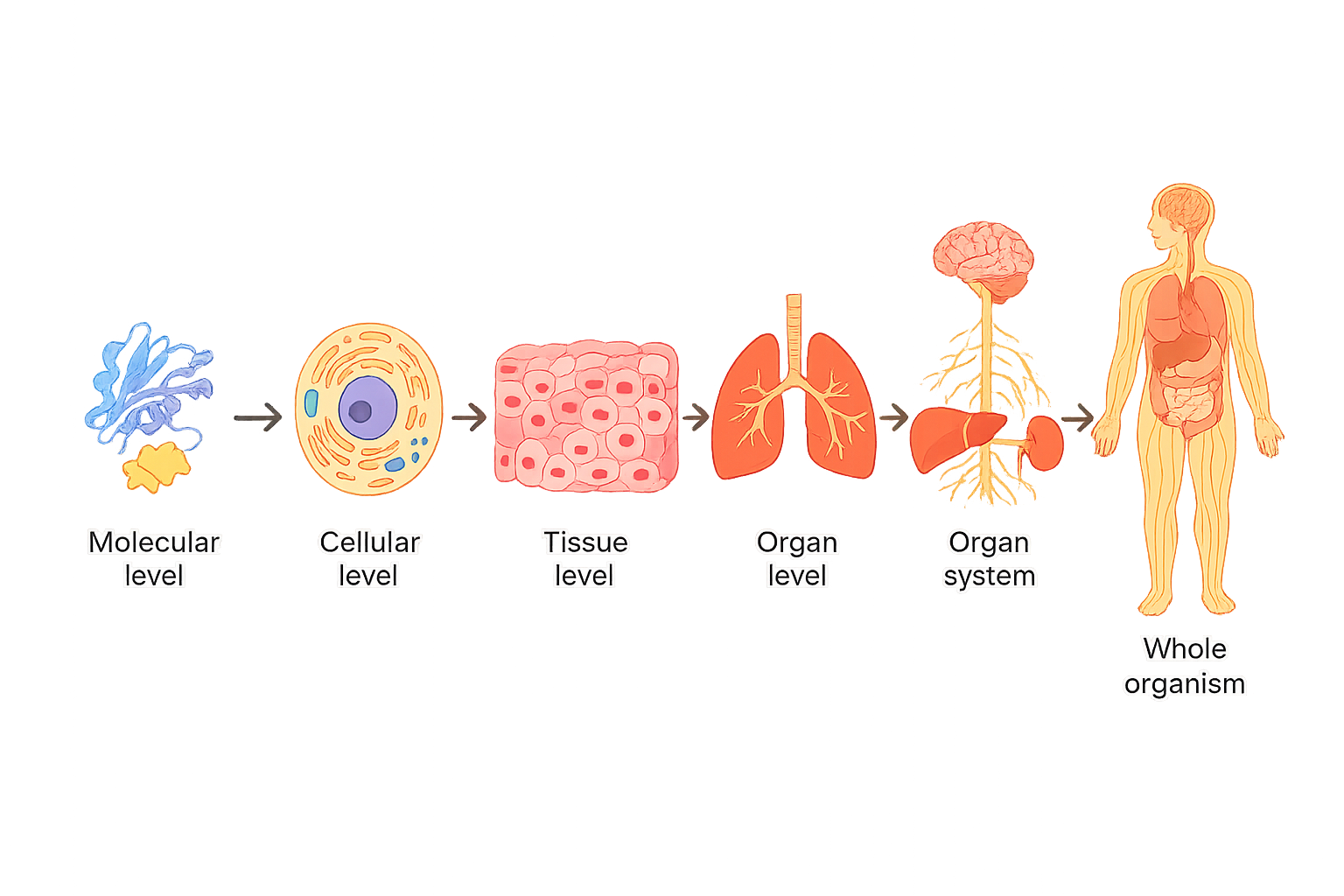
Proteins, metabolites, signaling molecules, redox reactions, and biochemical pathways
Changes in signaling, energy production, repair, transport, neurotransmission, immune activity, and gene regulation
Changes in how groups of cells function together
Effects across the nervous, gastrointestinal, immune, cardiovascular, endocrine, and other systems
The combined physiological impact experienced at the organism level
This is why the level being targeted matters. An intervention can support a downstream skill, behavior, symptom, or diagnosed condition without changing the upstream biology that contributed to it. A validated upstream intervention could theoretically influence several downstream outcomes at once.
The Impact Depends on Which Node Is Targeted
Different interventions act at different points between upstream biology and observable traits. The level being targeted determines the type and breadth of effect that may be possible.
Target the Trait or Outcome
Support a visible skill, behavior, communication need, functional barrier, symptom, or diagnosed condition after it has developed.
Target a Downstream Pathway
Address a biological process contributing to a particular medical outcome when the mechanism has been identified and an evidence-based intervention exists.
Target an Upstream Node
Potentially influence multiple downstream pathways and traits if the proposed shared mechanism is validated and shown to be safely actionable.
See the Five Levels That Can Be Targeted
The Cascade can be viewed across five intervention levels moving from upstream molecular drivers to downstream traits. The farther upstream the target, the greater the theoretical potential to influence multiple downstream effects, but the greater the research and validation required before clinical use.
Target the Upstream Genetic or Protein Driver
Gene-, RNA-, and protein-directed approaches can target molecular drivers before their effects propagate through downstream systems and pathways. Application to specific Cascade nodes remains a research and translational question.
Target Regulatory-System Dysfunction
Investigate whether dysregulation within immune, metabolic, cellular-repair, nervous-system, or epigenetic and genetic protein-synthesis systems can be measured, subgrouped, and safely modified.
Target What Is Redirecting Pathway Activity
The Cascade proposes that some pathway abnormalities may result from coordinated biochemical shunting rather than isolated pathway failure. Proposed nodes include the BH4, AAAH, NOS, AGMO, and related redox-sensitive shunts.
Target a Downstream Biological Pathway
Research and existing medicine can target identified pathways involving neurotransmission, immune signaling, inflammatory activity, oxidative stress, metabolism, mTOR, endocannabinoid signaling, E/I balance, and other mechanisms when an appropriate intervention exists.
Target the Individual Trait or Diagnosed Condition
Existing educational, therapeutic, and medical approaches can directly address communication, skill development, behavior, sleep, seizures, gastrointestinal conditions, psychiatric conditions, autonomic dysfunction, metabolic problems, and other identified needs.
These are intervention levels, not five established autism treatments. They show where an intervention could act within the proposed Cascade. Clinical availability differs substantially by target, condition, mechanism, and evidence base.
Support Skill, Behavior and Functional Development
Autism-related communication, learning, sensory, motor, behavioral, adaptive, and functional needs can be supported through educational, communication, occupational, behavioral, and other developmental approaches selected for the individual skill or barrier.
Behavior Supports
Support development of safer, more functional behaviors and alternative ways to communicate, regulate, respond, or access a needed outcome.
Occupational Therapy
Targets daily-living and functional skills, including sensory, motor, coordination, planning, regulation, and participation-related needs.
Speech Therapy and AAC
Supports speech, language, comprehension, motor planning, initiation, and access to functional communication through speech, AAC, or both.
Match Teaching Strategy to Neural-Circuit Change
NeuroToggle® is Kitzerow’s educational system for skill and behavior development. It matches teaching strategies to the neural-circuit changes they influence to optimize outcomes for developing, strengthening, generalizing, timing, and replacing functional skills and behaviors.
Understanding Skill and Behavior Development With NeuroToggle®
Every skill and behavior uses sensory, cognitive, and motor neural circuits working together. These circuits learn and change through experience.
What Circuits Are Involved?
Sensory, cognitive, and motor circuits work together to produce each skill and behavior.
Sensory Circuits
Receive and register relevant information from the body and environment.
Cognitive Circuits
Interpret, organize, connect, remember, and use relevant information.
Motor Circuits
Plan, coordinate, and produce movements, speech, gestures, or responses.
These circuits learn from experience. Repeated, appropriately matched experiences can build and change the pathways used for a skill or behavior.
What Type of Learning Is Needed?
Instructional Target
Build
The learner does not yet have the targeted skill or behavior.
Strengthen
The learner can perform the skill or behavior, but inconsistently.
Expand
The learner can perform it in one context, but not in others.
Time
The learner acquires it, but cannot retain or access it reliably.
Replace
A harmful or ineffective behavior is meeting an underlying need.
How Is Teaching Organized?
The teaching sequence matches instruction to the learner and the neural-circuit change needed.
Identify
Select the specific skill or behavior that instruction will target.
Define
Clarify the developmental goal and circuit change needed.
Apply
Use the teaching strategies outlined in NeuroToggle® Book 2.
Refine
Adjust instruction based on the learner’s response.
Explore the NeuroToggle® Resources
Begin with the learning foundations, continue with the complete instructional system, and use the toolkit to support application.
Target the Medical Condition
Comorbid medical conditions require targeted medical intervention from properly licensed medical professionals. Evaluation and treatment depend on the specific condition, symptoms, underlying mechanism, and established standard of care.
Medical Intervention Is Selected for the Condition
Pain, gastrointestinal symptoms, sleep disorders, seizures, dysautonomia, immune conditions, psychiatric conditions, metabolic disorders, nutritional problems, and other comorbidities require appropriate medical evaluation and treatment based on the condition involved.
The presence of autism does not make these conditions autism traits or remove the need to investigate and treat the underlying medical problem.
Medical Conditions Can Affect Autism Support Needs
Pain, neurological dysfunction, gastrointestinal distress, sleep disruption, autonomic symptoms, psychiatric symptoms, or other medical effects can alter communication, behavior, regulation, learning, mobility, independence, and participation.
Treating a comorbid condition may therefore improve function without implying that the medical intervention is treating autism itself.
Investigate the Shared Upstream Mechanisms
Kitzerow’s Autism and the Comorbidities Cascade investigates why particular autism-related and comorbid traits repeatedly occur together and whether multiple downstream outcomes share upstream regulatory, biochemical, or systems-biology mechanisms.
Move Upstream Before Multiple Outcomes Are Produced
The Cascade proposes that several traits and comorbid conditions may sometimes emerge downstream of shared biological nodes. If research continues to support that architecture, those nodes may become targets for eventual clinical translation.
Research Is Moving Across These Target Levels
Current autism research programs are increasingly examining genes and proteins, developmental systems, biological pathways, meaningful subgroups, biomarkers, functional outcomes, and targeted intervention rather than treating every downstream trait as an isolated research problem.
Therapy Development Across Biological Levels
The ARIA Roadmap is building a therapy-development pipeline spanning genetic medicines, protein interactions, developmental neurobiology, neuromodulation, communication, and clinical trials.
This places genes, proteins, neural systems, downstream mechanisms, functional outcomes, and clinical translation within the same broader research pipeline.
Explore ARIA Research Hubs →Biology, Biomarkers and Targeted Intervention
The IACC strategic planning process prioritizes research into biological links between autism and co-occurring conditions, how genetic and environmental factors act through biological mechanisms, and how those effects change across development and the lifespan.
It also identifies biomarkers, meaningful biological subgroups, treatment response, and more targeted medical, developmental, and educational interventions as research priorities.
Explore IACC →ARIA and IACC are pursuing research and clinical-translation directions across several of the same biological target levels represented in the Cascade. These include genes and proteins, biological mechanisms, systems and pathways, biomarkers, functional outcomes, and targeted interventions. Their work does not by itself establish the Cascade or validate every proposed node.
These Remain Research Targets
The proposed shared upstream mechanisms are not established treatments. They remain research targets for eventual clinical translation if research continues to support the proposed relationships.
Clinical translation would require continued validation of the biological nodes, measurable biomarkers identifying the relevant dysregulation, evidence that modifying the target changes downstream physiology, appropriate identification of the individuals for whom the mechanism applies, and demonstration of safety and meaningful clinical benefit.
What Does BioToggle® Organize Versus What Does the Cascade Explain?
BioToggle® organizes how regulatory and temporal biology changes biochemical pathway activity and which biological systems are impacted. Kitzerow’s Autism and the Comorbidities Cascade then follows those system-level effects through physiology to individual traits and investigates why particular traits cluster into recognized conditions.
Documented Biological Components
Genes code for proteins. Protein production and function can change with biological conditions. Proteins participate in biochemical pathways, and changes in pathway activity can affect multiple biological systems.
From Regulation to Systems Impacted
BioToggle® organizes how regulatory-system activation and biological timing influence gene expression, protein and isoform behavior, biochemical pathway activity, and the biological systems affected downstream.
From Systems Impact to Trait Clustering
The Cascade follows those biological effects through systems biology to physiological impact, individual traits, and the mechanisms proposed to explain why traits repeatedly cluster into recognized diagnostic conditions.
From Regulatory Change to Biological Systems Impacted
BioToggle® organizes the upstream regulatory process through biochemical pathway activity and identifies which biological systems those changes affect.
Immune · Metabolism · Cellular Repair · Nervous System · Epigenetic / Genetic Protein Synthesis
From Systems Biology to Individual Traits
The Cascade begins with the systems affected by biochemical dysregulation and follows the predicted consequences across levels of biological organization.
Metabolic → Cellular → Tissue → Organ → Organism
Changes in function across neural and body systems
Observable developmental, neurological, physiological, behavioral, and medical effects
Investigate why particular downstream traits repeatedly occur together rather than appearing as isolated outcomes
Recurring combinations of traits currently grouped clinically into recognized diagnoses and comorbid conditions
The Core Distinction
BioToggle® asks what changes upstream, how those changes move through biochemical pathways, and which biological systems are affected.
The Cascade asks what those system-level effects do across metabolism, cells, tissues, organs, and the organism, what physiological effects and individual traits result, and what mechanisms make those traits cluster into the checklist-defined conditions recognized clinically.
BioDials®: Why Biological Timing Matters
BioDials® organizes biological timing across ultradian, circadian, circannual, developmental, and aging-related cycles. Timing can influence when regulatory systems activate, how biochemical pathways respond, which systems are affected, and the downstream physiological consequences predicted by the Cascade.
How Was Kitzerow’s Autism and the Comorbidities Cascade Developed?
Kitzerow developed the Cascade using a comparative systems-biology approach. She first built a species-level biochemical reference network from uninterpreted UniProt protein data, then compared published autism and comorbid biomarker and gene findings against that network to identify converging points of dysregulation.
Kimberly Kitzerow
Kimberly Kitzerow is an educator who specializes in data synthesis. Her work began with trying to help her nonverbal autistic daughter develop speech and make progress with other autism-related skills and behaviors.
Read how the work began: From Silence to Speech →
That educational work became NeuroToggle®. The biochemical Cascade developed later through a separate line of investigation.
An Unanswered Systems Question
Autism is identified through observable developmental traits, yet autistic people also experience recurring medical, neurological, psychiatric, metabolic, immune, gastrointestinal, and other comorbidities.
The central question became: why do particular developmental and medical traits repeatedly occur together?
The Jigsaw Puzzle Methodology™
Kitzerow used uninterpreted protein data from UniProt to construct a biochemical network of human gene-coded proteins as a species-level reference.
She then compared published autism and comorbid biomarker findings and gene data against that reference network to identify where the findings converged and where dysregulation appeared within the larger biochemical system.
Construct a biochemical network from uninterpreted UniProt data on human gene-coded proteins
Organize protein functions, pathways, induction conditions, isoforms, cells, tissues, and physiological effects
Map published biomarker and gene findings onto the species-level reference
Find convergence across proteins, pathways, regulatory states, tissues, and physiological effects
BioToggle® organizes regulatory-system and biological-timing relationships through biochemical pathway impact and the biological systems affected
Follow system-level effects through physiology, individual traits, and the mechanisms proposed to explain recurring trait clusters
Her Daughter Was the Beginning of the Work, Not Evidence for the Cascade
Kimberly’s work began with trying to help her nonverbal autistic daughter develop speech and other autism-related skills and behaviors. That experience contributed to NeuroToggle®, but it did not establish the biochemical model.
The Cascade was developed later through comparison of published biomarker and gene findings against the independently constructed species-level biochemical reference network.
Important
This page is an educational, plain-language guide to autism, autism support needs, autism comorbidities, NeuroToggle®, BioToggle®, BioDials®, the Jigsaw Puzzle Methodology™, and Kitzerow’s Autism and the Comorbidities Cascade. It does not provide medical diagnosis, treatment, or individualized medical advice.
Kimberly Kitzerow is an educator and researcher, not a medical provider. Kitzerow diverts all medical guidance, diagnosis, treatment decisions, medication questions, testing decisions, vaccine-related medical questions, supplement use, diet-based medical interventions, and other individualized healthcare matters to properly licensed medical professionals.
BioToggle®, BioDials®, and Kitzerow’s Autism and the Comorbidities Cascade are frameworks used to organize and investigate biological relationships. The Cascade remains theoretical and is not an established autism diagnostic or treatment protocol.
NeuroToggle® is an educational system that matches teaching strategies to the neural circuit changes they influence to optimize outcomes for skill and behavior development. It is not a medical treatment for autism or its comorbidities.
Understanding Nonverbality as an Autism Comorbidity
Nonverbality, the inability to produce speech sounds, is not the absence of understanding. It is a breakdown in the pathways required to produce speech.
Speech-Motor Pathways
Speech is produced through speech-motor pathways.
When a child is nonverbal, the issue is not whether these pathways exist, but which part of the pathway is not functioning as expected.
The challenge is that there is currently no clear protocol to identify which mechanism is affected in each individual nonverbal child.
Learn About Speech-Motor MechanismsFrom Silence to Speech
Communication can be built when the correct pathways are targeted.
The From Silence to Speech page documents how communication was developed in Kimberly Kitzerow’s nonverbal autistic daughter. Her inability to speak was not due to a lack of understanding. It was a physiological limitation in producing speech, specifically within speech-motor pathways.
Communication was developed by identifying and targeting those underlying mechanisms using structured, neuroplasticity-based strategies that built and strengthened the neural circuits required for speech.
There is currently no standardized diagnostic protocol to determine which specific mechanism is not functioning in each child. Because of this, there is no reliable way to know who will benefit from targeted intervention and who may require long-term accommodations.
View From Silence to SpeechFolinic Acid
Interventions such as folinic acid are being explored in relation to communication development.
It is important to understand both the potential applications and the limitations when evaluating these approaches.
The Folinic Acid Concerns page outlines biochemical and research-based concerns regarding the use of high-dose folinic acid as a treatment in autism, particularly in developing children. It explains that folinic acid is a formyl form of folate involved in DNA synthesis and cell turnover, not methylation, and that increasing its availability can drive cellular pathways in ways that may have unintended downstream effects, especially with long-term use.
The page also raises concerns about the research being used to support this approach, including a clinical trial that was placed on FDA full clinical hold for investigator non-compliance but later published, along with issues related to potential conflicts of interest and overstated interpretations of modest results.
Together, these concerns highlight the need for careful evaluation, transparency, and stronger standards before widely adopting this as a treatment approach.
Review Folinic Acid ConsiderationsCommunication Methods
Communication is an access issue, not a measure of intelligence. When speech is not reliable, alternative systems provide a way to express language and participate.
This section outlines communication options based on how language is accessed, including body-based, picture-based, and device-supported systems.
These approaches fall under augmentative and alternative communication (AAC), which supports consistent and independent communication.
Early access to a reliable system matters. An AAC evaluation can help determine the best fit.
Explore Communication OptionsAdvocacy
There is currently no standardized diagnostic protocol to determine which speech mechanisms are not functioning in nonverbal children.
This leaves families without clear direction for diagnosis, treatment, or appropriate accommodation.
Advocacy is needed to push for standardized identification, evaluation, and support.