


The Autism and the Comorbidities Theory
- by Kimberly Kitzerow
“Autism and the comorbidities co-occur because they are caused by the same thing: gene mutations that trigger a system wide stress response, activating a BH4 Shunt. The body prioritizes this attempt to biochemically resolve the stress response over maintaining typical development and typical function in biochemically predictable ways. However, because the stress response is triggered by a gene mutation, it does not turn off, resulting in a lifelong allostatic existence.”
The Scientific Method
• Hypothesis: It is biologically implausible for autism traits and comorbid traits to co-occur systematically in each phenotype without a shared biochemical root mechanism.
• Data collection: built a biochemical network and retrieved existing autism biomarkers
• Testing: analyzed biomarkers against the network and identified points of dysregulation
• Conclusion: the Autism and the Comorbidities Theory
Independent Validation of This Framework Can Be Found Here.
The Autism and the Comorbidities Theory
Autism and the comorbidities co-occur because they are caused by the same thing: gene mutations that trigger a system wide stress response which activates a BH4 Shunt, producing autism symptoms via the impact on AAAH shunted neurotransmitter synthesis/activity, and comorbid traits via NOS uncoupling activating epigenetic redox-sensitive protein shunts. The body prioritizes this attempt to biochemically resolve the stress response over maintaining typical development and typical function in biochemically predictable ways. However, because the stress response is triggered by a gene mutation, it does not turn off, resulting in a lifelong allostatic existence.
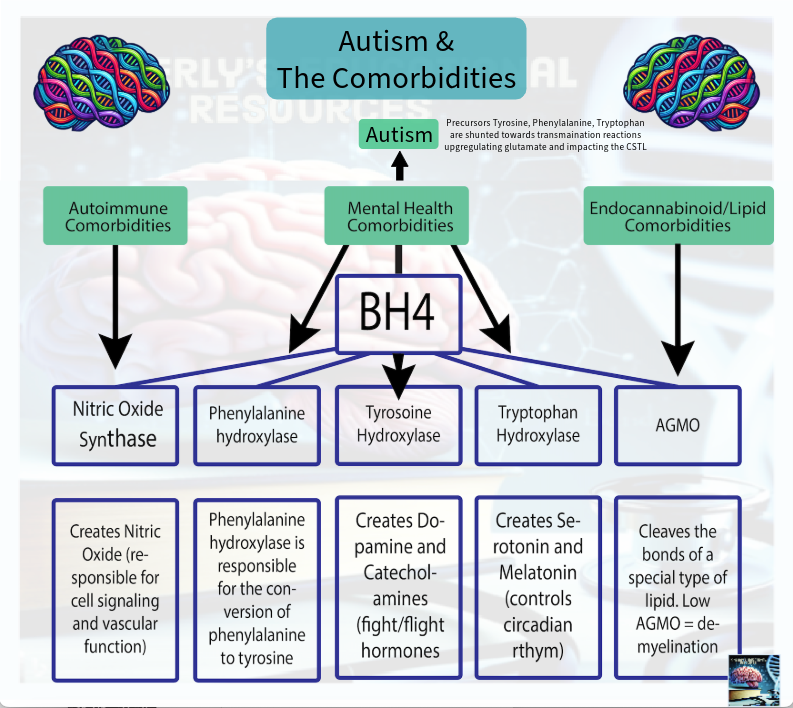
BH4 is a cofactor that is exclusive and unique to three BH4 dependent pathways: aromatic amino acid hydroxylate (AAAHs), nitric oxide synthase (NOS), and AGMO.
Comorbidities are conditions that co-occur with a primary diagnosis.
Prior Knowledge
BH4 is a known cofactor. We know its role in the body, and that levels are dysregulated in autistics from prior work. We have also known for decades that the comorbidities of autism are prevalent. The relationship between them has been investigated. However, my framework is the first to create a mechanistic framework that outlines how BH4 dysregulation can physiologically produce simultaneous biochemically linked autism and comorbid traits.
The BH4 Shunt results in several simultaneous mechanisms that produce both autism traits and comorbid traits:
1. Autism Traits: Impact on neurotransmitter synthesis.
2. Comorbid Traits: Impact of NOS uncoupling and AGMO dysregulation.
Phenotype variation
The BH4 Shunt responds differently to different types of stress, as well as the downstream impact of the primary gene mutation(s).
-
The BH4 Shunt and Autism Traits - (the AAAH's)
The Aromatic Amino Acid Hydroxylases are enzymes that are required for the creation the neurotransmitters dopamine, norepinephrine, epinephrine, serotonin, and melatonin.
BH4 is a required part of the recipe that combines with the AAAH’s to create these neurotransmitters.
Mechanism that Produces Autism Specific Traits: When BH4 is shunted, the precursor aromatic amino acids (phenylalanine, tryptophan, and tyrosine) are shunted towards transamination pathways. This alters glutamate activity. This change in glutamate activity/synthesis dysregulates the excitatory/inhibitory balance within the cortico striatal thalamic loop. The cortico striatal thalamic loop regulates movement, habit formation, and reward. This is what mechanistically results in the autism specific traits.
Replication: Stanford’s Neurodiversity Project reached out to me November 2023 asking for more information. Jan 2024 I petitioned for their help. August 2025 a team from Stanford published their version of a cure that targets this mechanism, E/I balance within a specific section of the cortico striatal thalamic loop called the reticular thalamic nucleus.
-
The BH4 Shunt and Comorbid Traits - (NOS Uncoupling)
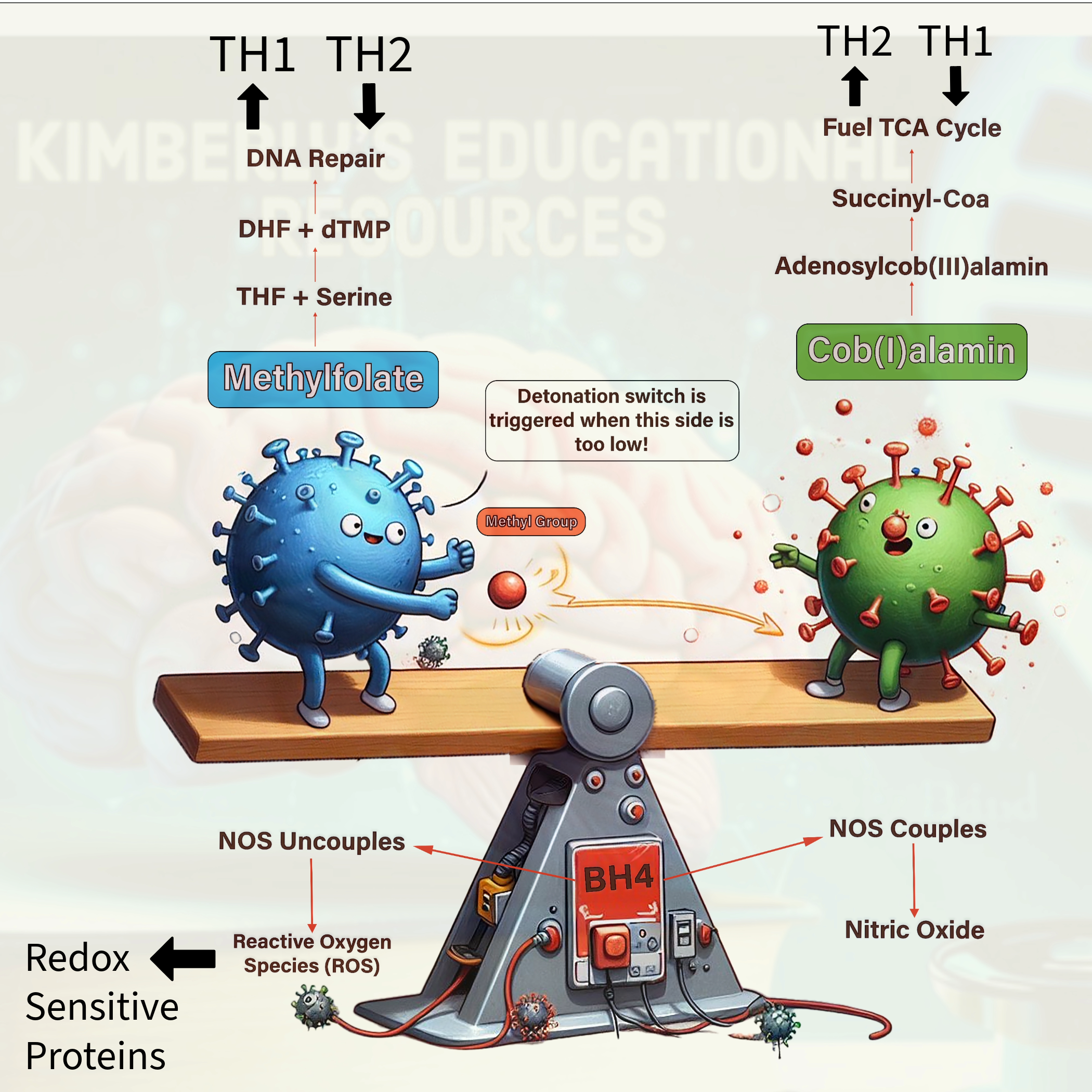
Nitric oxide synthase (NOS) is an enzyme that is used to create nitric oxide. It is the center of our stress response because it has a linchpin that acts as a detonation switch of sorts. When stress is detected, and ROS are present/the redox balance shifts, NOS uncouples. When NOS uncouples, it produces reactive oxygen species, specifically superoxide. This can be turned into other ROS such s hydrogen peroxide. Or, it can combine with nitric oxide and create peroxynitrite.
Mechanism that Produces Comorbid Traits: Through creating my biochemical network and identifying sources of protein induction, I realized comorbid traits revolve around ROS regulated protein induction. I call these epigenetic redox-sensitive protein shunts.
The induction of the proteins that keeps the body typically functioning and typically developing are regulated by time, daily, seasonally, developmentally, and over time as we age. I call this time-regulated process of protein synthesis the BioDials.
Proteins can also be induced via stress detection systems that are modulated via the ROS that NOS uncoupling produces. I call these epigenetic redox-sensitive protein shunts. They are the epigenetic regulation of protein synthesis because these proteins are genetically coded and turn on and off to produce them to resolve the stress. These systems that regulate how the human body responds to stressors are also known as the regulatory systems.
The regulatory system has 5 key components:
1. Set Point: the target range for physiological parameters.
2. Sensor: Detects deviations from the set point.
3. Error Detector: compares the sensor data to the set point.
4. Controller: Processes information and signals effectors.
5. Effector: Executes corrective actions to restore the set point back to baseline.
I identified 5 categorical regulatory systems based on the 5 different categories of protein inductions under stress. I call them the BioToggles: immune system, nervous system, cellular repair, metabolism, and genetic regulation.
When one regulatory system is activated via ROS, it results in a system wide response where effectors activate redox-sensitive protein shunts across all 5 categorical systems as resources reallocate to support the stress response until the set point is restored to the target baseline.
The comorbid traits manifest as the result of BioDial disruption and as a result of the prolonged activation of these epigenetic redox-sensitive protein shunts, via allostatic overload.
Phenotype Variation depends on the interaction of these variables:
What Gene Mutation is Present and Which Primary BioToggle is Activated By It
- Immune system – protects against pathogens (e.g., viruses, bacteria)
- Cellular repair – responds to physical trauma (e.g., wounds, tissue damage)
- Metabolism – prevents energy or nutrient failure (e.g., diabetic coma, starvation)
- Nervous system – preserves neurological integrity (e.g., stroke, seizure)
- Genetic regulation – maintains genomic stability (e.g., replication errors, epigenetic dysregulation).
- The developmental stage during which activation occurs
- Which BioDial processes (time-regulated protein synthesis) are affected
- Circadian rhythm: Daily regulation of protein synthesis that maintains physiological balance in the body
- Circannual cycles: Seasonal regulation of protein synthesis that coordinates metabolism, immunity, and repair with environmental and energetic demands during the change of seasons
- Development: Time-regulated progression from childhood through adulthood
- Aging and repair: Time-regulated cell turnover that protects barriers and repairs the body as part of natural processes
- The specific biochemical pathway that is disrupted
- The downstream physiological impact of the dysregulation
The discrepancy amongst research on environmental vs genetically induced autism pathology exists due to
- The duration of BioToggle activation impacts development and physiological function over time via BioDial disruption resulting in neurodivergent traits and comorbid traits. This is the core of the Neurodivergent Biochemistry Framework.
- Situationally flipped: Temporarily activated in response to an environmental or biochemical stressor and capable of returning to baseline once resolved. Acute and resolves.
- Chronically stuck: Persistently active due to prolonged stress exposure or disrupted feedback regulation due to gene mutations in allostatic proteins, or overloaded system, leading to sustained biochemical imbalance. Stuck and results in allostatic overload over time.
- Genetically locked: Permanently altered through genetic mutations that impact the regulatory system resulting in set point deviations or ineffective regulatory system function. Lifelong and does not resolve.
Together, these factors explain why individuals with similar genetic or diagnostic profiles may exhibit different traits, severities, or comorbidities within the neurodivergent spectrum. This is a systems biology explanatory framework: Neurodivergence isn't genetically homogeneous but mechanistically unified.
-
The BH4 Shunt and the Endocannabinoid System - (AGMO)
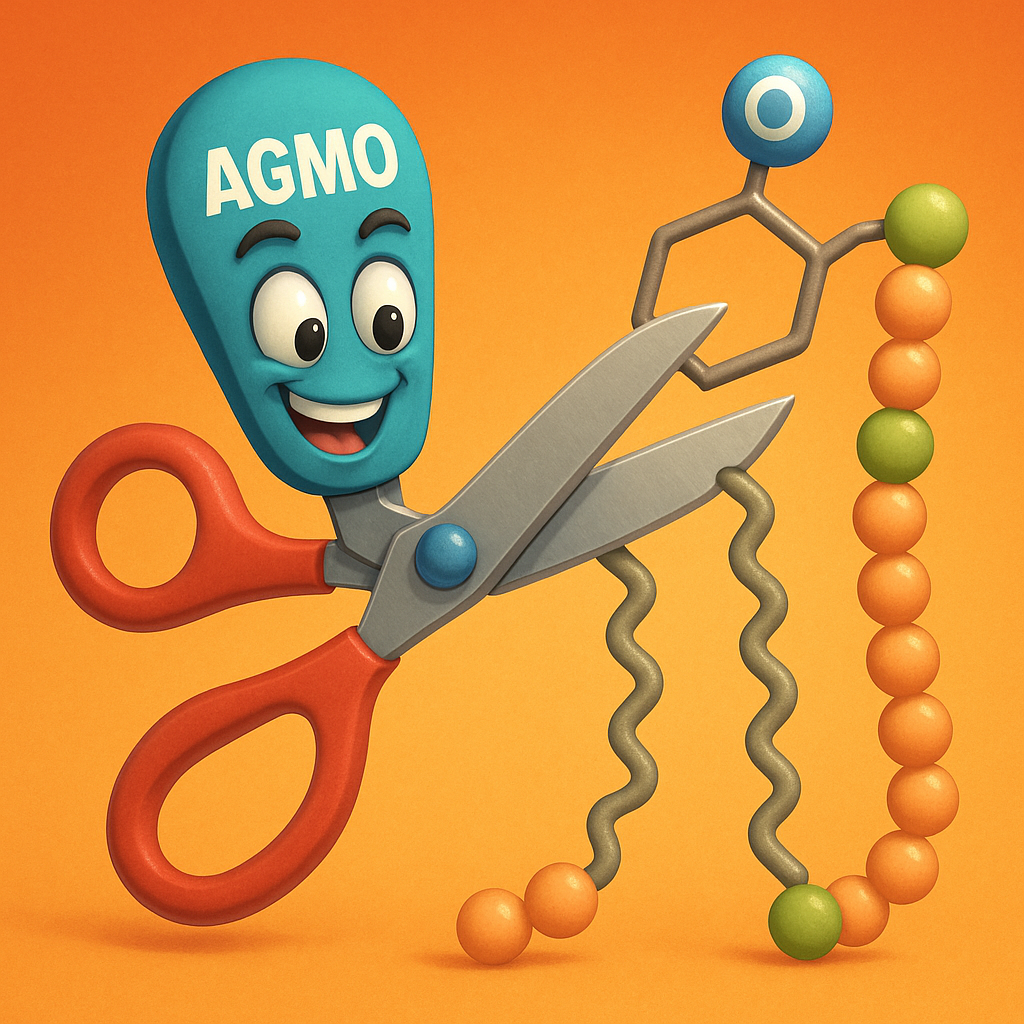
Mechanism: AGMO is a BH4 dependent enzyme. It is the only enzyme known to cleave the bond of ether lipids in humans. One such ether lipid is noladin ether, which creates 2-AG one of the most abundant endocannabinoids.
Other examples of ether lipids include plasmalogens, alkylglycerols, and platelet-activating factor (PAF).