

The 5 Core Frameworks of Neurodivergent Biochemistry
The Founding Insight
Autism and its comorbidities are pathologically linked through genetically induced allostasis, resulting in redox-sensitive protein shifts, most notably involving GCH1 regulation and the BH4 Shunt.
This shift doesn't affect just one part of the body. It initiates a cascade across physiological and developmental systems.
🔬 From One Discovery to Five Frameworks
IP Disclaimer: The frameworks described on this website—including BioToggles™, Biochemical Network Capacity™, and all associated systems—are original works and the protected intellectual property of Kimberly’s Educational Resources. These frameworks are not licensed for therapeutic, medical, or commercial use. Unauthorized use constitutes infringement. The creator assumes no liability for any misuse or misapplication.
🧠 Universal Principle of the Frameworks
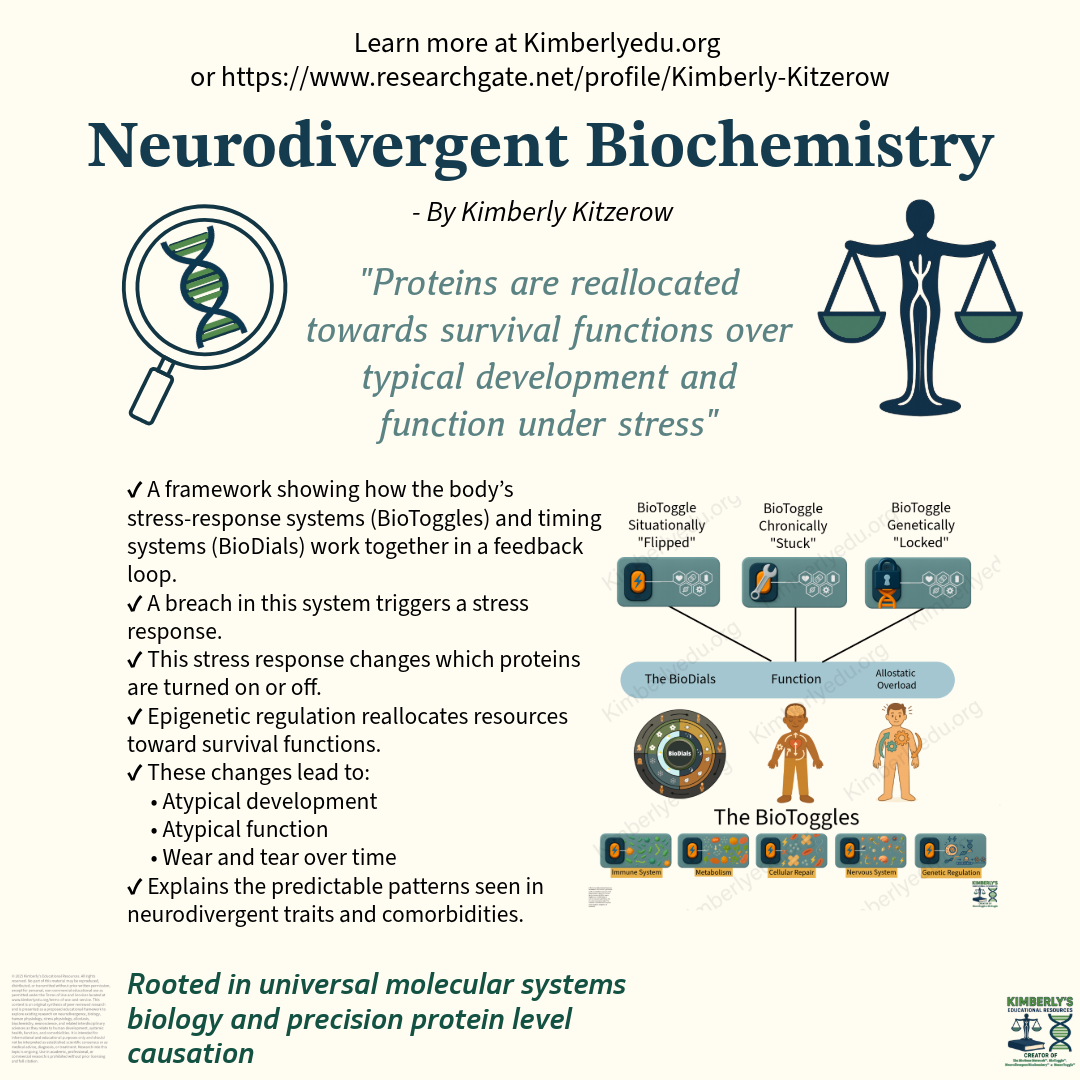
When the body is under stress, it changes which proteins are made and when they are made. This process is part of how the body’s regulatory systems respond to challenges. Growth, health, behavior, and learning all depend on this timing and prioritization, and during stress, the body prioritizes survival functions over its typical functions.
🧩 The Five Core Frameworks

🧬 BioGene Network
The BioGene Network expands the Central Dogma of cellular biology into a functional biochemical model: DNA → RNA → Protein → Protein Function → Cellular Function → Systemic Function → Health Outcomes → Development, Aging, and Disease. It maps how gene expression and redox-sensitive protein function drive systemic adaptation through the body’s allostatic (stress-response) network. This model forms the foundation of Neurodivergent Biochemistry, linking molecular shifts and epigenetic regulation to system-wide physiological changes that shape neurodevelopment, behavior, and health outcomes.
⚙️ BioToggle
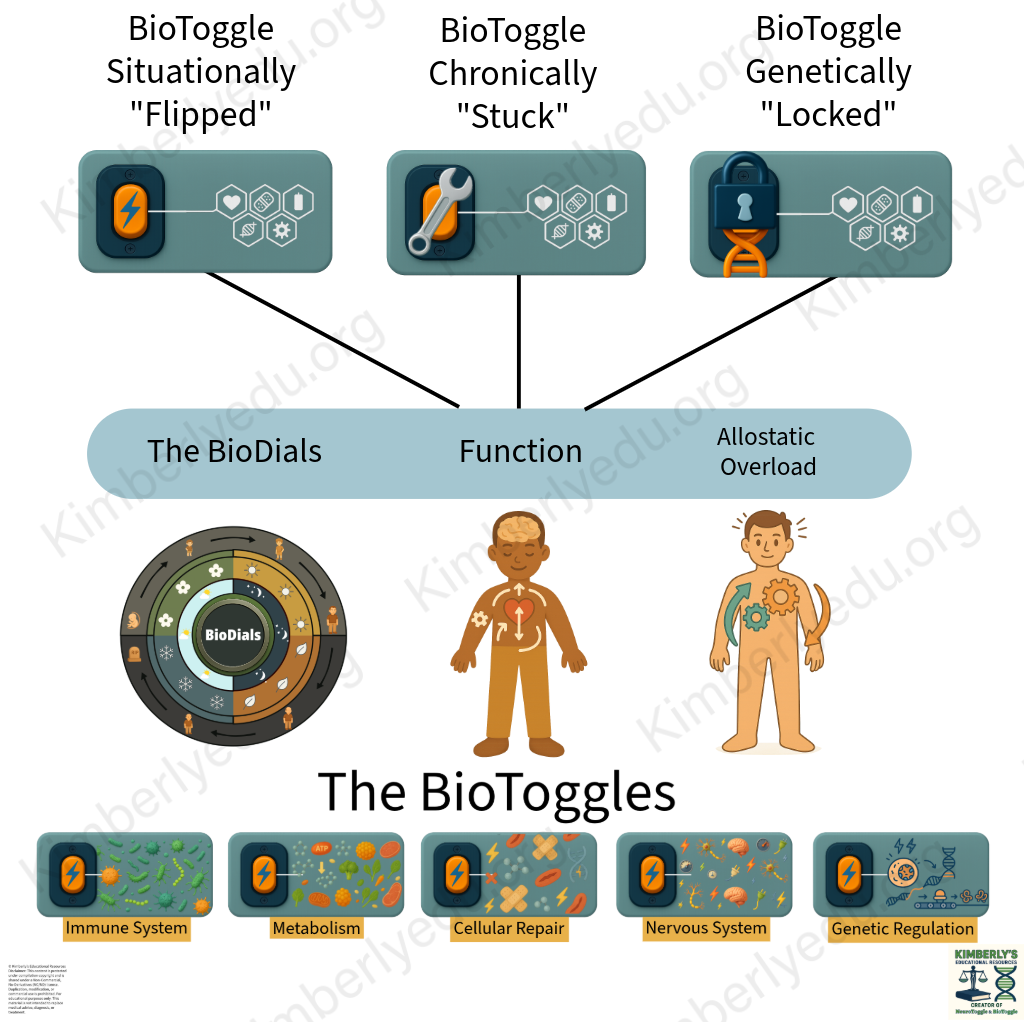
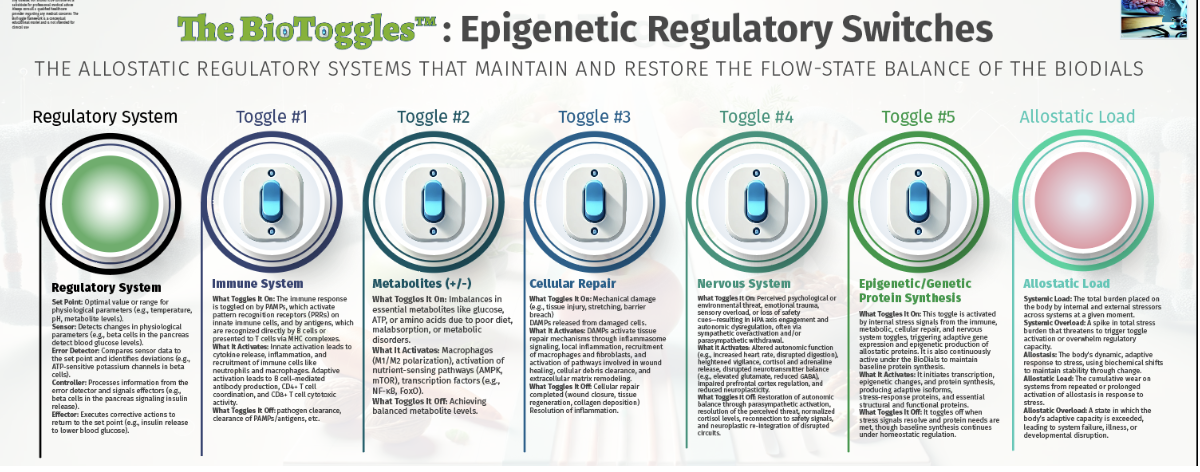
The BioToggles describe how cellular stress leads to system-wide biochemical adaptation. They model the activation of five core regulatory systems: immune, metabolic, cellular repair, nervous system, and gene regulation, each responding to redox imbalance. When stress surpasses the body’s systemic capacity, these systems enter overload, triggering Epigenetic BioToggles that reprogram how the body allocates energy and function. This framework explains how stress responses can transform into physiological change through coordinated interactions between systems.

⏳ BioDials
The BioDials model the body’s intrinsic timing systems that regulate protein synthesis across circadian, circanual, developmental, and age-related cycles. They control which proteins are active and when, maintaining the rhythmic flow of biochemical activity that supports life and cellular function. Each BioDial coordinates protein timing for function, repair, and growth. When the BioToggles are activated, the BioDials shift toward survival-oriented timing rather than typical physiological function and development. Disruption of the BioDials can also activate the BioToggles, creating a reciprocal feedback loop between timing and regulation that determines how the body adapts under stress.

🧠 NeuroToggle®
NeuroToggle optimizes the conditions required for neural circuitry to be built, expanded, strengthened, and timed. Each behavior and skill represents information encoded within neural circuits. This framework translates what is known about how neural circuits form and refine into practical educational strategies, leveraging well-established teaching pedagogy. It aligns instruction with the brain’s natural processes of learning and adaptation, creating environments that support efficient skill acquisition and long-term retention. While developed to address the diverse learning needs of neurodivergent individuals, its principles apply to all learners.
⚛️ Neurodivergent Biochemistry
Neurodivergent Biochemistry explains the physiological impact of BioToggles being situationally flipped, chronically stuck, or genetically locked. When one toggle is disrupted, the others shift in response to reallocate resources and restore balance across all five regulatory systems. This process also disrupts the BioDials, redirecting protein synthesis toward survival mechanisms and altering patterns of physiological function and development. Phenotypes are predictable based on which gene mutation alters regulatory protein integrity, which system initiates allostasis, when the protein is synthesized in the BioDials, and how biochemical resources are redistributed to maintain system stability.