


NeuroToggle®
Utilizing Neuroplasticity Instruction Strategies to Optimize the Learning Environment to Strengthen, Time, Expand, and Grow Neural Connections
NeuroToggle® Principle:
“Every skill and behavior is a neural circuit shaped by neuroplasticity.”
Neural connections encode the information for each skill or behavior. This includes both cognitive skills/behaviors through cognitive neural circuits and motor skills/behaviors through motor neural circuits.
During the prenatal phase, genetics provides the blueprint for neural development, governing processes like neuron formation, migration, and initial connectivity
After birth, nurture becomes the dominant force, with sensory input, social interaction, and practice shaping the brain’s pathways and functionality. These experiences determine how the brain builds, expands, strengthens, and times its connections.
Because of this, neural circuits can be refined through well established teaching pedagogy that creates the conditions the brain needs for learning to occur.
For a breakdown of how NeuroToggle® compares to existing behavior/skill development frameworks click here.
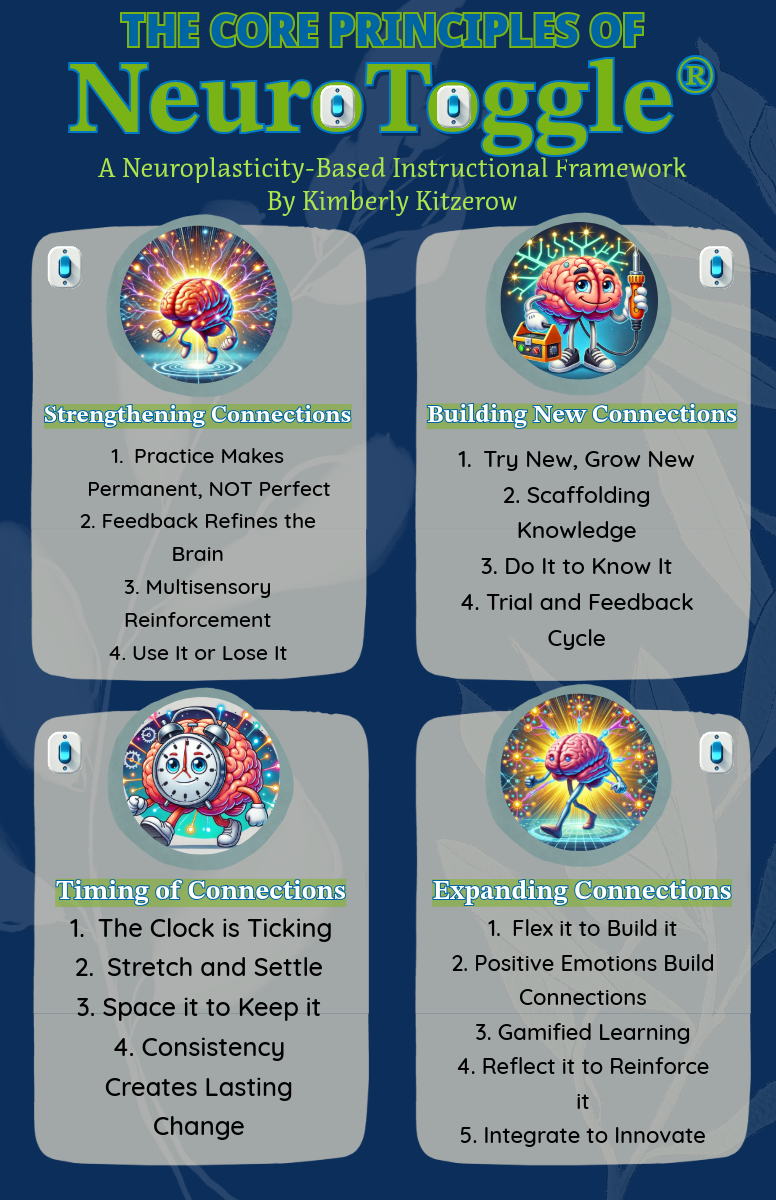
What is NeuroToggle?
-
NeuroToggle® is an educational instructional framework based on the principle that every skill or behavior is produced by a neural circuit shaped through neuroplasticity. Rather than beginning with the behavior itself, the framework focuses on the development of the neural circuitry that makes that behavior or skill possible.
-
When we talk about skills and behaviors, we are talking about things the body has learned how to do.
Skills can include things like pointing, imitating sounds, coordinating breathing for speech, responding to language, using gestures, or producing words. Behaviors are the actions we see when the nervous system sends signals to the body to perform those skills.
The information needed to perform a skill or behavior is stored within the nervous system through neural connections.
Neural connections literally hold the information the body uses to perform an action. Groups of these connections form neural circuits, which coordinate the signals needed for skills and behaviors.
For any skill to occur, several types of neural circuits work together.
· Afferent circuits (sensory pathways): These circuits carry information from the body and environment to the brain.
· Processing circuits: These circuits organize and interpret incoming information so the brain can determine an appropriate response.
· Efferent circuits (motor pathways): These circuits carry signals from the brain back to the body, allowing the body to perform actions such as gestures, movement, or speech.
Communication and coordinated behavior depend on these systems working together. The brain receives information, processes it, and then sends signals back to the body to produce action.
-
Neural circuits develop in two main ways.
The first stage occurs genetically during development in utero, when the nervous system is forming.
The second stage occurs after birth through experience and interaction with the environment. As children move, explore, attempt communication, and interact with others, their neural circuits continue to develop. Our neural networks quite literally hold the information for how to do any skill/behavior or respond to any stimulus.
Development of skills and behaviors are shaped by a combination of genetic, epigenetic, and experience-driven factors.
-
Neural development does not happen all at once. It unfolds over time through genetically guided developmental processes and through experiences that occur during important developmental windows in childhood.
During these periods, the body and brain are building and organizing the systems that support learning, movement, communication, and behavior.
Under typical conditions, the body moves in and out of stress responses while continuing development. But when the body experiences prolonged biological stress, it can shift into a survival state where stabilizing the body becomes the priority.
When this happens, the body may temporarily prioritize managing stress over continuing typical developmental processes.
One thing that became clear to me over time is that the body’s regulatory systems can sometimes push the body into this survival state. When stress states are brief, development usually continues once balance is restored. But when stress states are prolonged during development, they can interfere with how developmental processes unfold.
In some cases, these prolonged stress states may also be influenced by genetic or epigenetic factors that affect how the body regulates itself. When that happens, there may not always be a simple situational change that resolves the underlying biological stress.
-
Autonomic responses can occur when the nervous system is dysregulated. This can include fight-or-flight responses, shutdown responses, or other physiological stress reactions that are not voluntary choices.
The impact of dysautonomia on behavior can affect things such as:
• Fight: aggressive or self-injurious behavior, throwing objects, yelling, destroying materials, explosive refusal to requests
• Flight: eloping or running away, hiding under furniture, leaving the classroom, attempting to exit buildings, avoiding tasks or environments, covering ears and moving away, pacing, escaping or resisting demands
• Freeze: becoming silent, staring or zoning out, not responding when spoken to, inability to initiate tasks, shutting down during demands, putting head down, slowed responses, appearing “stuck”,
• Fawn: excessive compliance, apologizing repeatedly, people-pleasing behavior, constantly seeking approval, masking distress, copying peers to blend in, avoiding expressing needs
Why May NeuroToggle® Be Especially Relevant for Neurodivergent Learners?
-
Glutamate is the brain’s primary excitatory neurotransmitter and plays a central role in synaptic plasticity. It is heavily involved in Hebbian learning, the process by which neural pathways strengthen when neurons repeatedly activate together. This mechanism allows the brain to link new information to existing neural circuits.
Research suggests that glutamatergic signaling may function differently in many neurodivergent individuals, including autistic individuals. When glutamate signaling is atypical, the process of linking new information to existing knowledge can occur unusually quickly in some situations or more slowly in others. This can contribute to uneven learning patterns often observed in neurodivergent learners.
Because NeuroToggle focuses on expanding and strengthening neural circuits through structured experience and repetition, it directly supports the Hebbian processes involved in stabilizing learning pathways.
-
Dopamine plays a key role in motivation, reward signaling, and the formation of new neural pathways. Unlike Hebbian learning, which strengthens existing connections, dopamine is strongly associated with non-Hebbian learning, which supports the creation of entirely new neural circuits during learning and skill acquisition.
Differences in dopaminergic signaling have been documented in several neurodivergent conditions. These differences can influence how easily the brain forms new pathways, meaning that the development of new skills may occur unusually quickly in some contexts or more slowly in others.
NeuroToggle is especially relevant in this context because it emphasizes the intentional development of new neural circuits through structured experience, helping guide the formation of new pathways during learning.
-
Oxytocin plays an important role in social cognition, social awareness, and social bonding. Oxytocin receptors are found on glutamatergic neurons within areas of the brain involved in social processing, including regions of the prefrontal cortex.
Research suggests that oxytocin signaling can influence social learning processes, including how individuals interpret social cues, develop social awareness, and experience social anxiety. Differences in these signaling systems may contribute to variations in how social neural circuits develop in neurodivergent individuals.
Because NeuroToggle focuses on building and refining neural circuits through structured experience, it can help support the development of social learning pathways by creating environments where social circuits can expand, strengthen, and become more coordinated over time.
-
Research indicates that many neurodivergent individuals, including autistic individuals, may experience differences in physiological regulation related to genetic and epigenetic factors that influence stress-response systems. When these regulatory systems remain chronically activated, the body can remain in a prolonged allostatic state. In this state, biological resources may be prioritized toward maintaining physiological stability rather than toward processes such as neural development and learning.
This makes frameworks like NeuroToggle especially relevant for neurodivergent learners. Because there is currently no clear or consistent medical approach for resolving these states, NeuroToggle was developed to help support learning even when physiological dysregulation may still be present. The goal is to create structured learning conditions that allow the brain to continue building the neural pathways required for communication, skill development, and functional behavior, even while other biological factors may still be influencing development.
While these neuroplasticity based instruction strategies can support learning for anyone, they may be especially relevant for neurodivergent learners because research indicates that several biological systems involved in neural circuit development may function differently, impacting skill and behavior development in neurodivergent learners. Optimizing the conditions that support neuroplasticity may help facilitate the development and strengthening of neural pathways involved in learning and skill acquisition.
Parent to Parent
Parents often have many questions when navigating autism, communication development, and the many different approaches discussed online. This section provides answers to some of the most common questions I receive about NeuroToggle®, nonverbal autism, speech development, and learning strategies. These responses are intended to help clarify how the NeuroToggle Framework relates to existing therapies, explain the reasoning behind the strategies I used with my daughter, and provide additional context for parents exploring different paths for supporting their child’s development.
-
NeuroToggle was successful for my daughter. Using NeuroToggle to support the development of the motor neuron pathways and linguistic neural circuits involved in speech production may help support speech and language development in some individuals. NeuroToggle focuses on creating structured learning conditions that support the expansion, strengthening, and coordination of the neural circuits required for the development of any skill or behavior, including speech.
However, the ability to produce speech also depends on the integrity of the motor pathways involved in speech production. If there is physical damage or structural impairment in the neural systems responsible for producing speech sounds, impairing the connection to the brain and speech production (apraxia), this may require accommodations or alternative communication approaches rather than relying on neuroplasticity based learning strategies alone, dependent on severity.
Detailed neurological imaging is not routinely used to determine the mechanistic reasons why some individuals are unable to produce speech sounds. When there is an inability to see or hear, we typically evaluate the function of the systems involved in vision or hearing. However, this type of investigation has never been performed for speech production. This lack of investigation is one of the reasons I submitted a change petition calling for greater recognition of speech-motor pathways when evaluating nonverbal individuals.
For a deeper explanation of how speech relates to neural circuitry, see:
Understanding Nonverbality Through Speech-Motor Pathways
https://www.kimberlyedu.org/understanding-nonverbality-through-speech-motor-pathwaysTo support efforts to improve the evaluation of speech-motor mechanisms in nonverbal individuals, you can sign the change petition here:
Sign the Change Petition
https://www.change.org/p/test-speech-mechanisms-in-nonverbal-individuals -
When parents start researching nonverbal autism, it can feel like every corner of the internet has a different explanation and a different solution. Some families focus on diet. Others focus on genetics. Others focus on therapies or neurological regulation.
One thing that helped me make sense of all this information was realizing that most of these discussions are actually focused on different regulatory systems in the body.
These systems help the body respond to stress and maintain balance. When one of them becomes dysregulated, the body can shift into a kind of survival or stress state where stabilization takes priority over typical development and function.
Much of the unsolicited advice you’ll encounter fall into one of these areas.
1. Immune System and Detoxification
Some approaches focus on the immune system and the body’s response to inflammation, illness, or environmental stressors.
You may see discussions about things like:
• gut health
• inflammation
• immune dysregulation
• detoxification strategies
• environmental exposures
The general idea behind these approaches is that if the immune system is under constant stress, the body may stay in a protective state that interferes with normal development.
2. Metabolism and Nutrient Pathways
Another area of discussion focuses on metabolic pathways and nutrients that support cellular function.
Parents exploring this space may come across conversations about:
• folate metabolism
• B vitamins such as B12
• mitochondrial function
• nutrient absorption
• energy production in cells
These approaches focus on the body’s ability to produce energy and support the biochemical processes that development depends on.
3. Cellular Repair and Regeneration
Some communities focus on therapies that attempt to support cellular repair or regeneration.
This can include discussions around emerging or experimental therapies such as regenerative medicine that remains controversial and contested, so I don’t go into detail on it.
4. Nervous System Regulation (Dysautonomia)
Another category focuses on the autonomic nervous system, which regulates automatic functions in the body such as heart rate, digestion, breathing, and stress responses.
Some children experience dysautonomia, which means the autonomic nervous system has difficulty regulating these functions properly.
When the autonomic system is dysregulated, a child’s body may remain in a chronic stress state, often described as fight-or-flight, and this may impact neural development.
5. Genetic Regulation
The final category involves genetics and how gene regulation influences development and biological pathways.
Parents sometimes pursue genetic testing to understand whether gene variants may be affecting:
• metabolism
• nervous system activity and development
• immune function
• cellular repair processes
Genetics can influence how the body responds to stress and how different regulatory systems function.
However, genetic findings do not always lead to clear treatment options, and research in this area is still evolving.
-
The current framework that is historically recommended for building behaviors and skills is Applied Behavior Analysis (ABA). ABA is commonly recommended for autistic children and focuses on teaching skills and behaviors through structured practice and reinforcement.
In ABA, behaviors are typically understood through four main functions of behavior:
• Attention – the behavior is used to gain attention from others
• Escape or avoidance – the behavior is used to avoid or leave a situation or demand
• Access to tangibles – the behavior is used to obtain a desired item or activity
• Sensory stimulation – the behavior itself provides internal sensory input
These categories are used to help therapists understand why a behavior is happening so they can design strategies to teach alternative behaviors.
However, this framework does not include a category for autonomic behaviors, which originate from the body’s nervous system regulation rather than from a deliberate behavioral function.
Autonomic responses can occur when the nervous system is dysregulated. This can include fight-or-flight responses, shutdown responses, or other physiological stress reactions that are not voluntary choices.
Because dysautonomia and nervous system dysregulation are common in autistic individuals, this distinction can be important.
The impact of dysautonomia on behavior can affect things such as:
• Fight: aggressive or self-injurious behavior, throwing objects, yelling, destroying materials, explosive refusal to requests
• Flight: eloping or running away, hiding under furniture, leaving the classroom, attempting to exit buildings, avoiding tasks or environments, covering ears and moving away, pacing, escaping or resisting demands
• Freeze: becoming silent, staring or zoning out, not responding when spoken to, inability to initiate tasks, shutting down during demands, putting head down, slowed responses, appearing “stuck”,
• Fawn: excessive compliance, apologizing repeatedly, people-pleasing behavior, constantly seeking approval, masking distress, copying peers to blend in, avoiding expressing needs
In some neurodivergent children, demand avoidance may present through behaviors that resemble fight or flight responses, while strong emotional reactions to perceived rejection or criticism may sometimes appear through freeze or fawn responses. These patterns can vary widely between individuals and situations, reflecting how a child’s nervous system responds to stress or perceived threat rather than a fixed behavioral profile. These behaviors are not intentional defiance but nervous system responses to stress or perceived threat. Because the brain prioritizes survival during these states, learning systems are less accessible. This is why it is essential to support regulation before education, allowing the nervous system to settle so the brain can engage in processing, memory formation, and skill development. When the body is stuck in survival mode, development can become more difficult because the body is prioritizing stabilization rather than learning.
-
When I began working with my nonverbal autisticdaughter, I approached development with the understanding that development unfolds over time in a sequence. Many skills build on earlier ones, and certain milestones often need to occur before others can happen.
Within the NeuroToggle framework, I think of development as moving forward in a dial-like progression, where one stage supports the next.
For us, the sequence looked like this:
1. Joint attention: First, the skill had to enter her awareness. The question was: Will she pay attention to what I am paying attention to?
2. Mirroring (imitation): Next came mirroring. The question became: Will she repeat what I am doing?
3. Independent initiation: The final stage was spontaneous initiation. At this point, the question was: Will she independently begin performing the skill or behavior on her own?
Using NeuroToggle’s neuroplasticity-based teaching strategies, I designed targeted learning experiences that followed this sequence while also supporting the neural circuitry involved in speech, including motor circuits, sensory circuits, and processing circuits.
For example, when we worked on blowing bubbles, the steps followed this progression:
• First: Will she watch me blow the bubbles? (joint attention)
• Next: Will she try to repeat the blowing action? (mirroring)
• Then: Will she begin blowing bubbles on her own? (independent initiation)
I used the same NeuroToggle progression across other activities designed to support the systems involved in speech, including:
• blowing bubbles
• using spin wheels and other breath-based toys
• practicing facial movements and sounds
• pairing these activities with language and interaction
The reason for approaching development this way is that the information the nervous system learns about how to perform skills and behaviors is stored within neural connections. NeuroToggle strategies about how to time, expand, grow, and strengthen neural connections are used to help ensure that this information becomes deeply and efficiently ingrained within neural circuitry, allowing the body to reliably recall and perform those skills over time.
I also used verbal grounding during these activities. I would verbalize what she was seeing, doing, or trying to communicate in order to help keep her regulated and engaged with the task. This helped connect the language circuits with the motor and sensory experiences happening at the same time, because the brain has more difficulty encoding and retaining new information when the nervous system is dysregulated.
In addition to these learning experiences, I also used gentle vibration therapy to stimulate facial motor neurons. I did this with a small facial cleansing massager to activate the muscles in the face and mouth involved in speech movements.
Alongside these exercises, I also provided a daily multivitamin containing active forms of nutrients at low doses. The goal was to provide her body with the physical ingredients that act as building blocks for development, including the processes the nervous system uses to form and support neural connections involved in learning and communication.
These approaches were simply part of what we used in our home environment while supporting her development over time.
It is important to emphasize that this reflects our personal experience as a family. Every child’s developmental path is different, and what works for one child may not work for another.
-
There is a huge amount of information online about all of these topics. Some of it is helpful. Some of it is incomplete or misleading.
What works for one child does not always work for another.
So, if you are navigating this space, take a deep breath. Move slowly. Ask questions. Work with professionals you trust when possible.
And most importantly, be kind to yourself.
Parenting a nonverbal child often means learning things you never expected to have to learn. You are doing the best you can for your child, and that matters more than you know.
-
NeuroToggle is a pedagogical framework, which simply means it focuses on how learning is taught, not just what is taught.
For parents, this matters because it gives you a way to think about how to help your child build skills and behaviors, rather than feeling stuck waiting for development to happen on its own.
Using pedagogy means you can target any skill or behavior by creating learning experiences and exercises that specifically support the neural circuits involved in that skill.
In practice, this means breaking development down into smaller pieces and creating experiences that help those circuits activate and strengthen over time.
For example, when my daughter was nonverbal, I focused on experiences that connected the physical systems involved in speech with the language systems in the brain.
Some of the things I did included:
• using gentle vibration on facial muscles with a small facial cleansing massager to stimulate the motor neurons involved in facial movement
• practicing targeted facial expressions and mouth movements
• using spinning toys and movement activities to help regulate attention and engagement
• pairing these physical activities with language and communication experiences at the same time
The goal was to help bridge the gap between the physical systems that produce speech and the neural circuits that process language, and ensure the information is deeply encoded for recall optimization.
Over time, combining these kinds of experiences can help the nervous system begin coordinating the pieces required for communication.
Every child is different, and the specific exercises or experiences that help one child may not help another. I found it helpful to target my daughter’s special interests for engagement. The idea behind the framework is that targeted learning experiences can support the development of neural circuits involved in many different skills and behaviors.
-
Speech is only one way humans communicate.
Your child still needs ways to express needs, feelings, ideas, and experiences right now, even while speech is developing.
Things like gestures, pictures, sign language, or AAC devices can help children communicate while spoken language is still emerging.
Many parents worry that using these tools will prevent speech. In reality, research and clinical experience show the opposite. These tools often reduce frustration, support language development, and help build the pathways that speech eventually uses.
Another important reason to prioritize communication is awareness of language deprivation syndrome. When children are unable to access a usable language during early development, it can affect learning, cognition, and social development later on.
Because of this, access to language should always be prioritized over waiting for speech to emerge.
Providing a child with ways to communicate early helps ensure they are developing language, connection, and understanding of the world around them.
Speech may come later, but language and communication should never be delayed while waiting for it.
-
The NeuroToggle Framework represents the educational and neurodevelopmental component of the broader Neurodivergent Biochemistry framework.
Neurodivergent Biochemistry examines how physiological regulatory systems and biological timing mechanisms influence development and behavior. Within this larger model, the NeuroToggle Framework focuses specifically on how neural circuits form and refine through neuroplasticity.
Development can be understood as the convergence of physiological regulation (BioToggles), biological timing (BioDials), and the neuroplastic formation and expansion of neural circuits (NeuroToggles). Together, these systems influence how neural circuits develop and how learning and behavior emerge. When regulation or timing systems shift, they can alter how neural circuits form and expand, and educational strategies can be used to help reprioritize and support neural circuit development.
Within Neurodivergent Biochemistry, three interconnected systems shape development:
BioToggles: Physiological Regulatory Systems
BioToggles represent the major physiological regulatory system domains responsible for maintaining internal balance in the body. These systems influence how the body allocates energy and resources under different conditions.
The framework identifies five primary BioToggles:
• immune system regulation
• metabolic regulation
• nervous system regulation
• cellular repair systems
• genetic and genomic regulationChanges within these regulatory systems can affect cognition, behavior, and learning by altering the physiological conditions under which neural development occurs.
BioDials: Biological Timing Systems
BioDials describe the temporal domains that regulate when physiological processes occur across different biological time scales.
These timing systems include:
• Ultradian timing – short cycles occurring multiple times within a day
• Circadian timing – daily physiological rhythms (~24 hours)
• Circannual timing – seasonal physiological patterns
• Developmental timing – changes across stages of growth and maturation
• Aging timing – lifespan changes in repair capacity and physiological prioritizationThese biological timing systems influence when physiological processes occur and how developmental processes unfold over time.
NeuroToggles: Neural Circuit Development
Within this broader biological framework, the NeuroToggle Framework focuses on how neural circuits develop through neuroplasticity.
Every skill and behavior corresponds to a neural circuit shaped through experience. Neural connections encode the information required for both cognitive and motor functions. During prenatal development, genetics provides the blueprint for early neural formation and connectivity. After birth, experience becomes the dominant influence shaping how these circuits develop.
Within the NeuroToggle Framework, neural circuits develop through four core processes:
• expanding neural connections
• growing neural connections
• strengthening neural connections
• timing the development of neural connectionsLearning experiences and educational strategies influence these processes by providing the repeated input necessary for neural circuits to form and refine.
Integrating Biology and Learning
By integrating BioToggles, BioDials, and NeuroToggles, Neurodivergent Biochemistry provides a systems-level perspective on development.
Physiological regulation influences the body’s internal state.
Biological timing influences when physiological processes occur.
Neuroplasticity shapes how neural circuits form through experience.Together, these interacting systems provide a broader framework for understanding how learning, behavior, and development emerge.
Disclaimer: While the broader Neurodivergent Biochemistry Framework raises awareness of how physiological regulation may influence development, the NeuroToggle® Framework is an education-based instructional strategies framework designed to support learning and skill development through neuroplasticity-informed teaching methods. It is not a medical treatment, diagnostic tool, or substitute for professional medical care. Any concerns related to physiological regulation, health conditions, or medical factors that may disrupt development should be addressed under the guidance of a qualified physician or licensed healthcare professional.
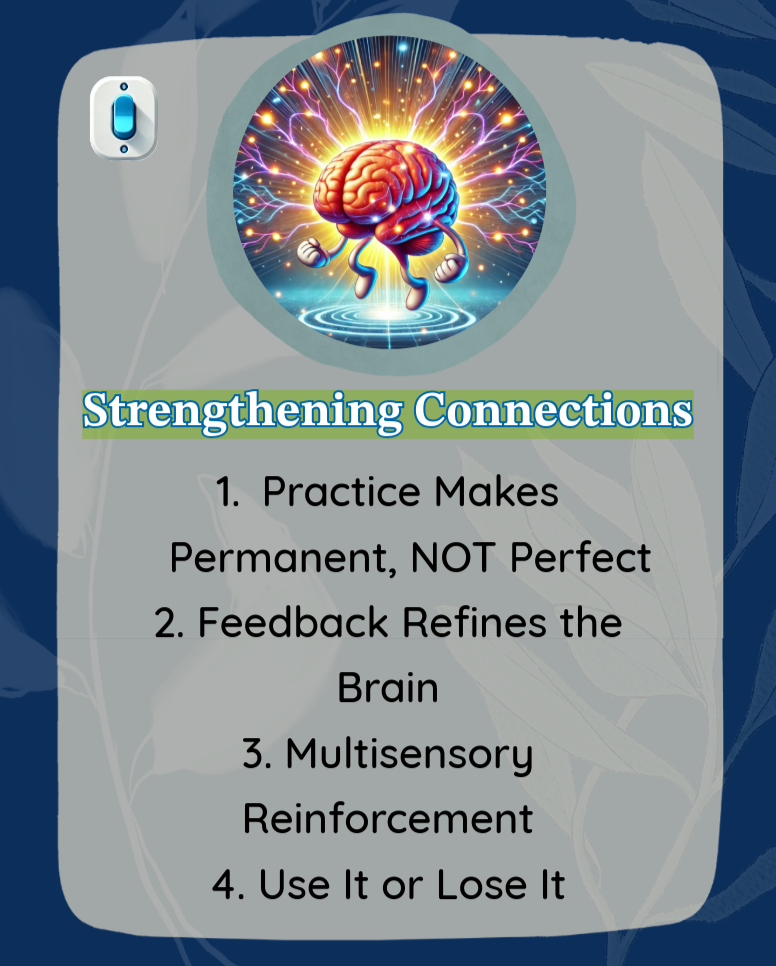
Strengthening Connections
Consolidating and reinforcing encoded information for long term retention.
Once neural pathways are formed, they must be reinforced and stabilized to ensure long-term retention. Consolidation transforms fragile short-term memories into durable long-term memories, primarily through long-term potentiation (LTP), myelination, and synaptogenesis. Without reinforcement, unused connections weaken due to long-term depression (LTD) and synaptic pruning.
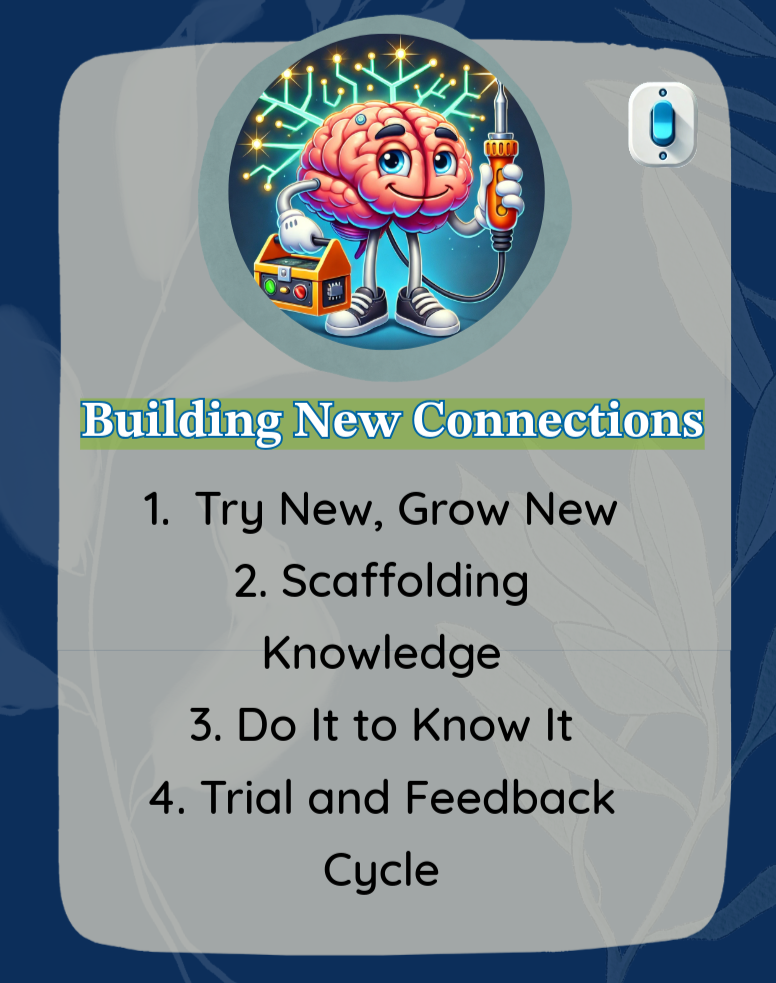
Building New Connections
Encoding knowledge by forming new neural pathways.
Learning begins with encoding, where new neural pathways are formed in response to experience and instruction. However, encoding does not guarantee accuracy, as the brain stores information as it is received, whether correct or incorrect, making structured learning essential.
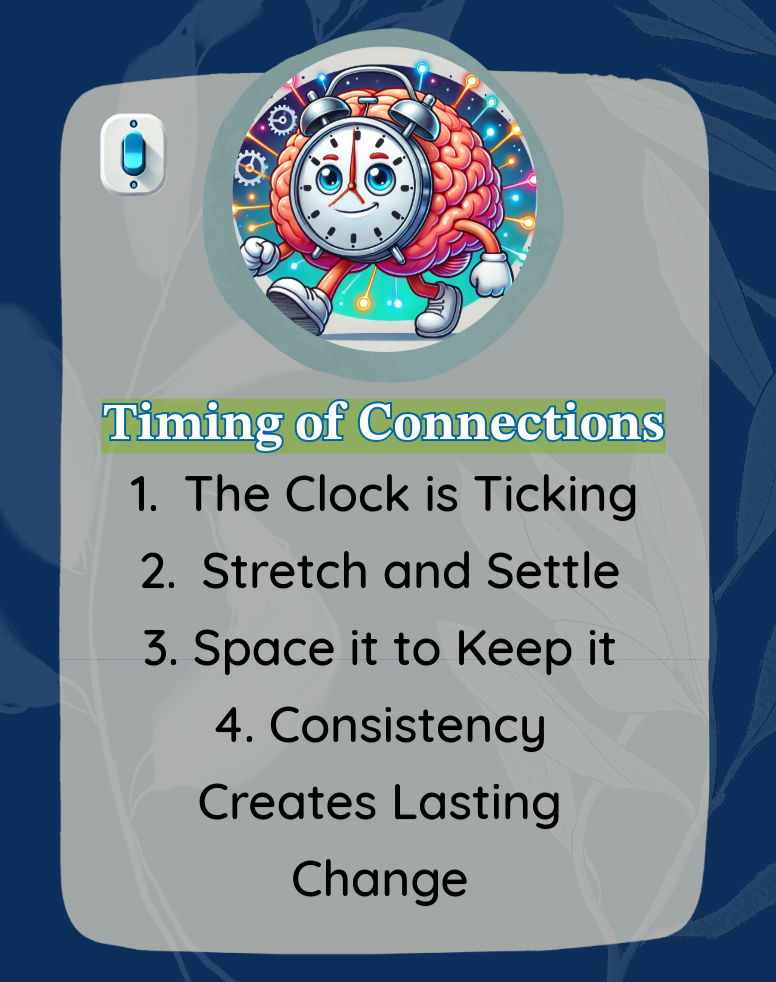
Timing Connections
Timing of Connections - Optimizing learning efficiency through retrieval cycles, spacing, and sleep.
Learning efficiency depends on when and how often information is retrieved and reinforced. The brain optimizes learning through spaced repetition, retrieval cycles, and sleep-based consolidation, which ensures knowledge is not just stored but also easily accessible when needed.
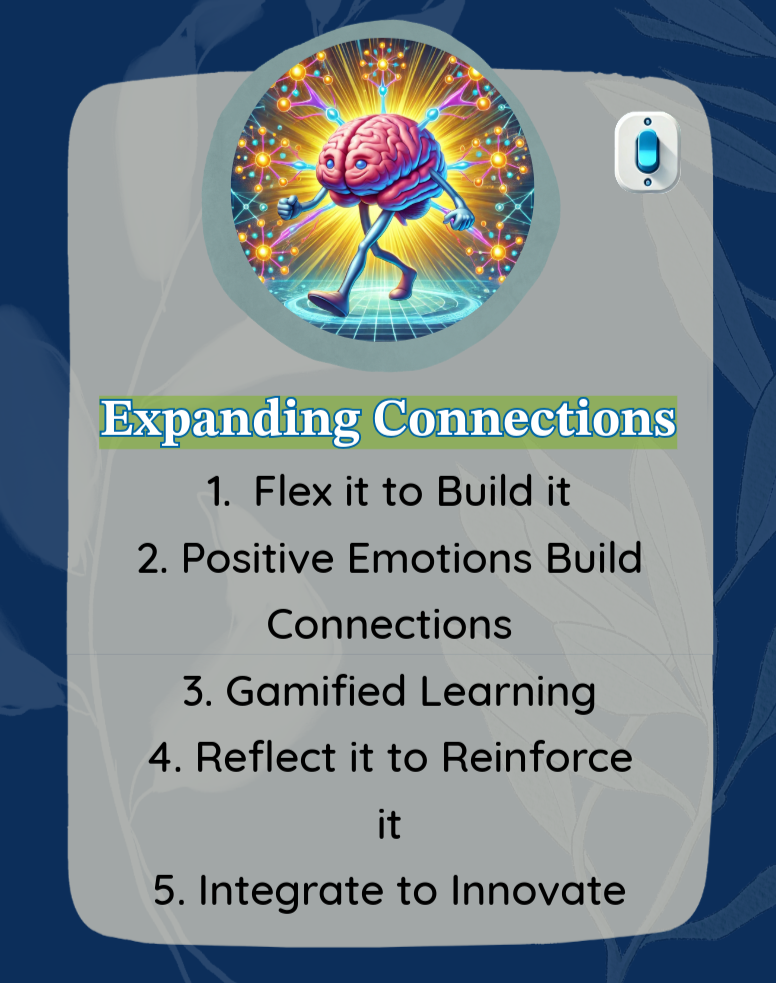
Expanding Connections
Expanding Connections - Modifying, adapting, and integrating knowledge through reconsolidation.
Learning is not static. It must be flexible, adaptable, and integrated across different cognitive domains. Reconsolidation occurs when memories are retrieved and temporarily modified before being stored again, allowing the brain to correct errors, refine knowledge, and increase adaptability.
The NeuroToggle Framework within Neurodivergent Biochemistry
The NeuroToggle Framework represents the educational and neurodevelopmental component of the broader Neurodivergent Biochemistry framework.
Neurodivergent Biochemistry examines how physiological regulatory systems and biological timing mechanisms influence development and behavior. Within this larger model, the NeuroToggle Framework focuses specifically on how neural circuits form and refine through neuroplasticity.
Development can be understood as the convergence of physiological regulation (BioToggles), biological timing (BioDials), and the neuroplastic formation and expansion of neural circuits (NeuroToggles). Together, these systems influence how neural circuits develop and how learning and behavior emerge. When regulation or timing systems shift, they can alter how neural circuits form and expand, and educational strategies can be used to help reprioritize and support neural circuit development.
Within Neurodivergent Biochemistry, three interconnected systems shape development:
BioToggles: Physiological Regulatory Systems
BioToggles represent the major physiological regulatory system domains responsible for maintaining internal balance in the body. These systems influence how the body allocates energy and resources under different conditions.
The framework identifies five primary BioToggles:
• immune system regulation
• metabolic regulation
• nervous system regulation
• cellular repair systems
• genetic and genomic regulation
Changes within these regulatory systems can affect cognition, behavior, and learning by altering the physiological conditions under which neural development occurs.
BioDials: Biological Timing Systems
BioDials describe the temporal domains that regulate when physiological processes occur across different biological time scales.
These timing systems include:
• Ultradian timing – short cycles occurring multiple times within a day
• Circadian timing – daily physiological rhythms (~24 hours)
• Circannual timing – seasonal physiological patterns
• Developmental timing – changes across stages of growth and maturation
• Aging timing – lifespan changes in repair capacity and physiological prioritization
These biological timing systems influence when physiological processes occur and how developmental processes unfold over time.
NeuroToggles: Neural Circuit Development
Within this broader biological framework, the NeuroToggle Framework focuses on how neural circuits develop through neuroplasticity.
Every skill and behavior corresponds to a neural circuit shaped through experience. Neural connections encode the information required for both cognitive and motor functions. During prenatal development, genetics provides the blueprint for early neural formation and connectivity. After birth, experience becomes the dominant influence shaping how these circuits develop.
Within the NeuroToggle Framework, neural circuits develop through four core processes:
• expanding neural connections
• growing neural connections
• strengthening neural connections
• timing the development of neural connections
Learning experiences and educational strategies influence these processes by providing the repeated input necessary for neural circuits to form and refine.
Integrating Biology and Learning
By integrating BioToggles, BioDials, and NeuroToggles, Neurodivergent Biochemistry provides a systems-level perspective on development.
Physiological regulation influences the body’s internal state.
Biological timing influences when physiological processes occur.
Neuroplasticity shapes how neural circuits form through experience.
Together, these interacting systems provide a broader framework for understanding how learning, behavior, and development emerge.
Disclaimer: While the broader Neurodivergent Biochemistry Framework raises awareness of how physiological regulation may influence development, the NeuroToggle® Framework is an education-based instructional strategies framework designed to support learning and skill development through neuroplasticity-informed teaching methods. It is not a medical treatment, diagnostic tool, or substitute for professional medical care. Any concerns related to physiological regulation, health conditions, or medical factors that may disrupt development should be addressed under the guidance of a qualified physician or licensed healthcare professional.