


Folinic Acid Concerns
Important Background Information
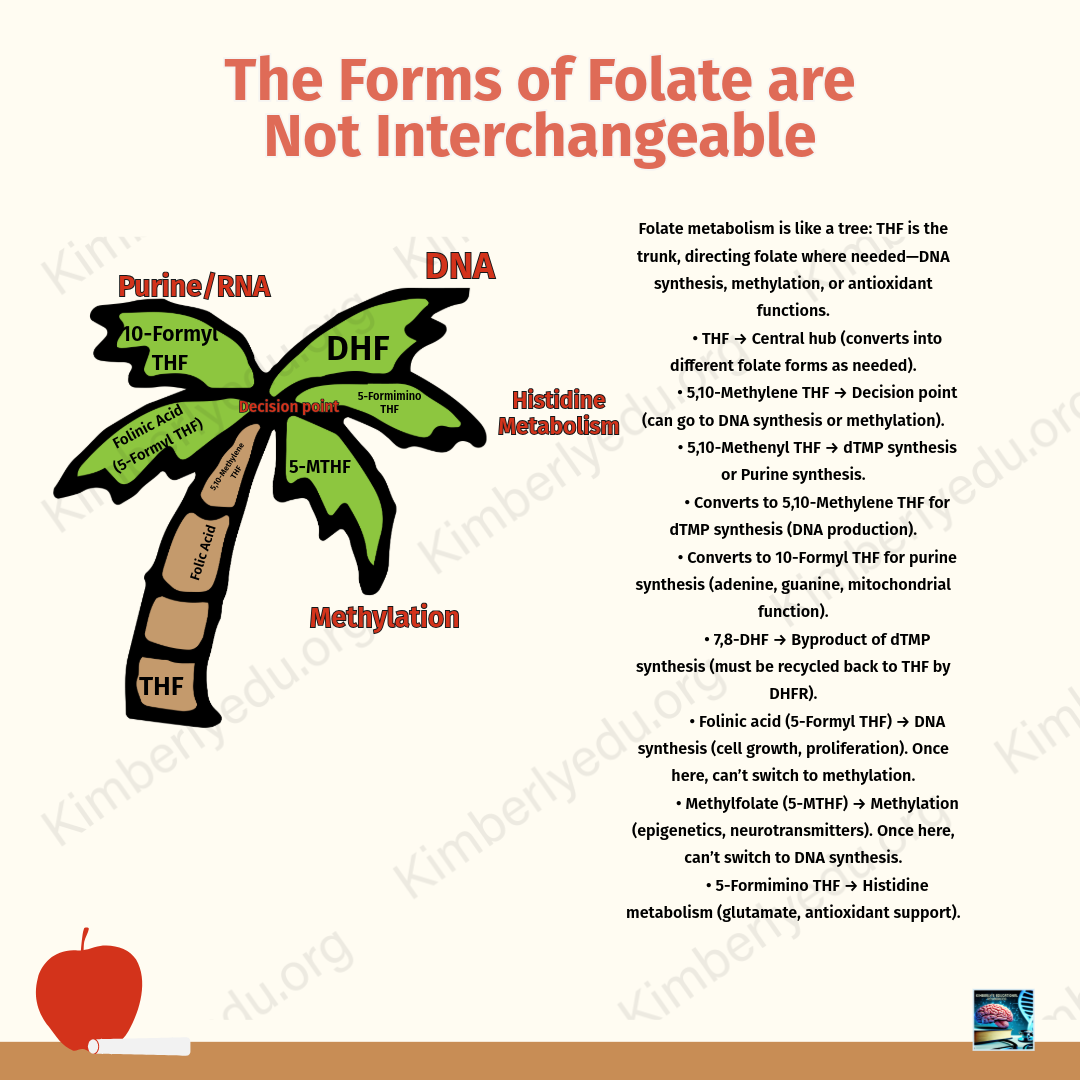
The forms of folate are not interchangeable. They each act in different pathways. Folinic acid is a formyl form of folate, not a methyl form of folate. It acts in cell turnover not methylation.
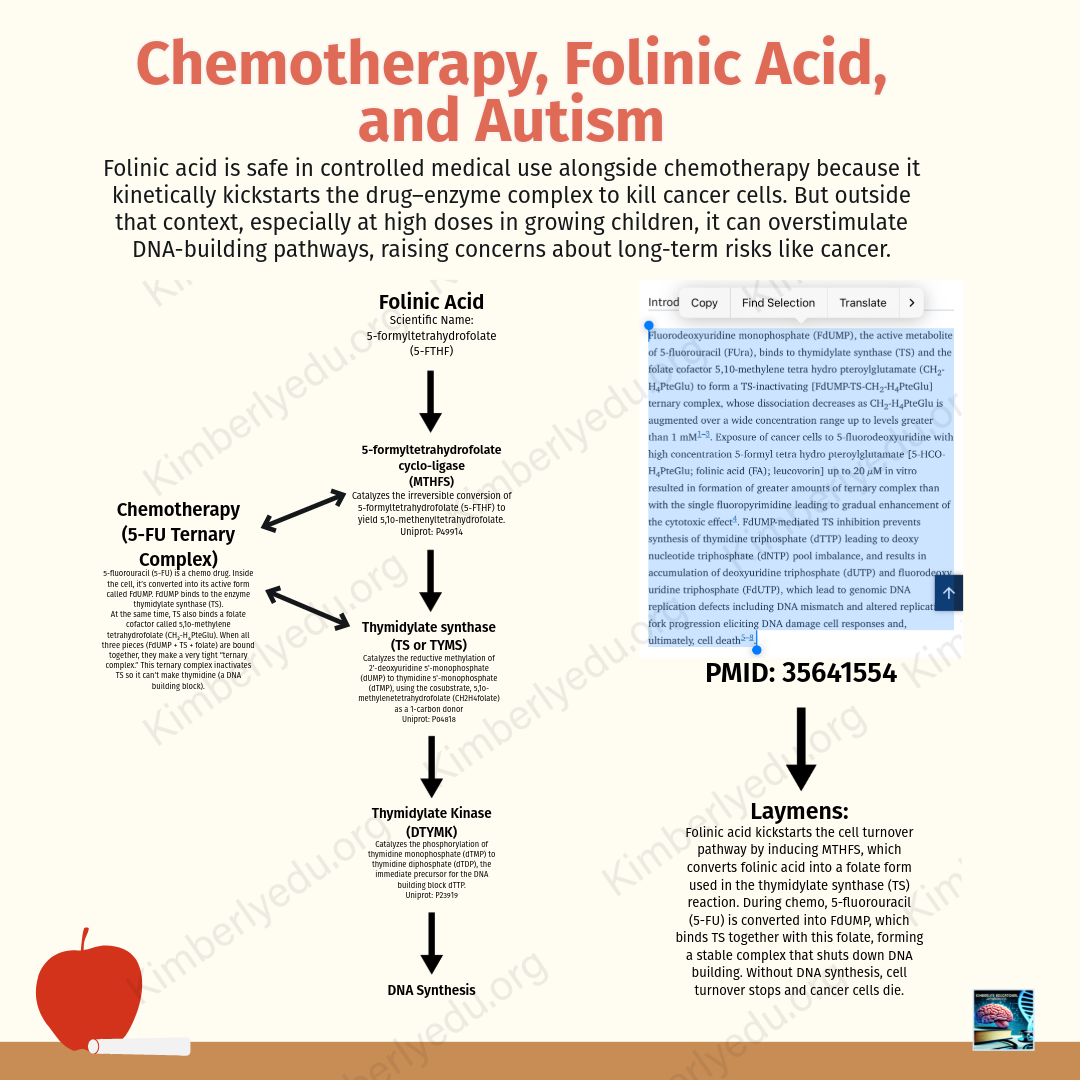
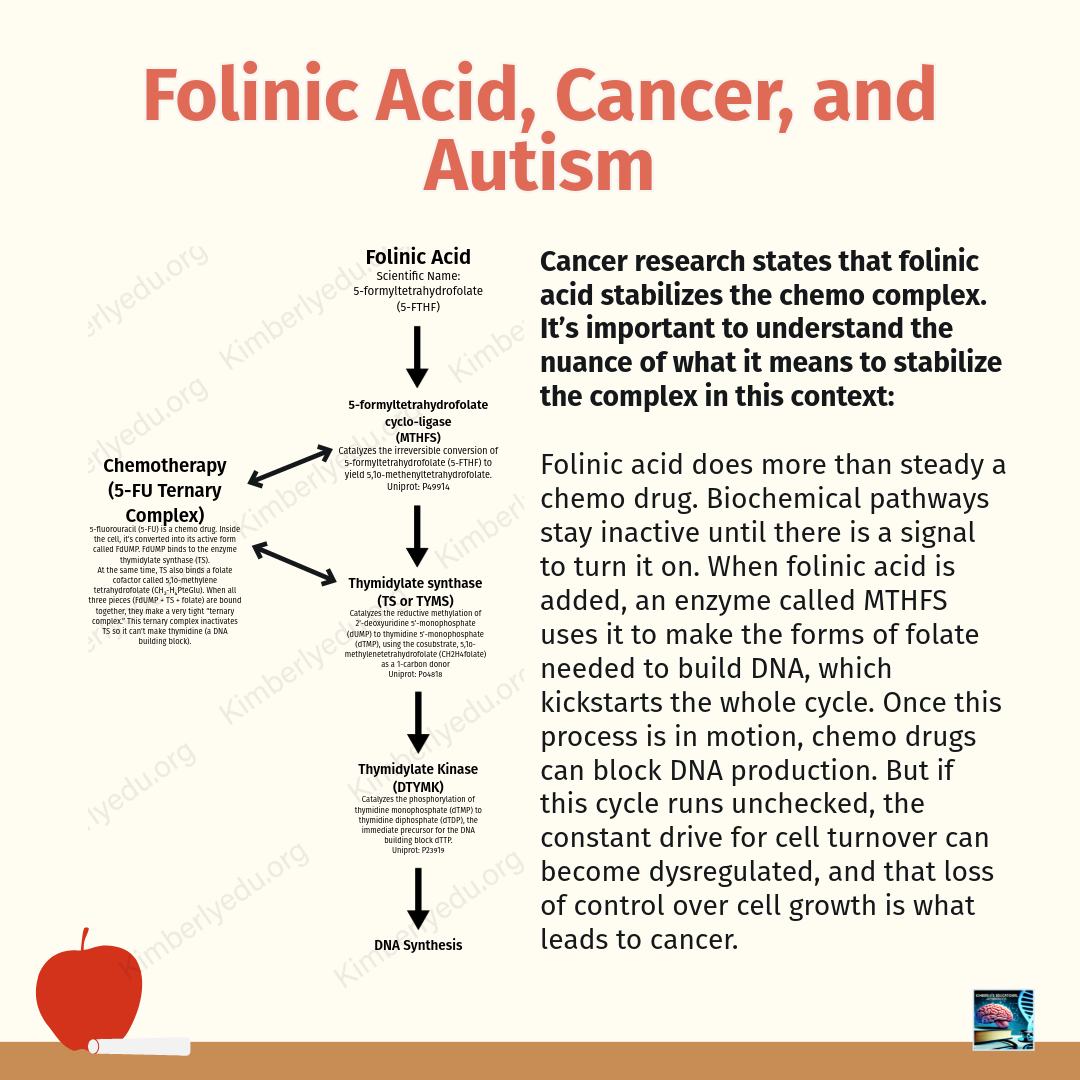
Biochemical pathways have to be initiated kinetically. This is typically done through cell signaling processes. However, it can also be induced via Michaelis-Menten Kinetics in which adding the substrate of a reaction can upregulate a a reaction within a biochemical pathway. MTHFS is the only enzyme that utilizes folinic acid as a substrate. It is an irreversible reaction within the cell turnover pathway. This is why it is used in chemotherapy, as a way to activate the cell turnover pathway so that it sets off the creation of the ingredients needed to form the chemo complex.
I am an educator who collaborates with researchers on neurodevelopment and systems biochemistry. I am writing this review to clarify and raise awareness for concerns regarding the folinic acid trial associated with Arkansas Children’s and UAMS, as well as the publication that followed, and the current administrations support of utilizing this as a treatment prior to the resolution of the concerns listed below. I did reach out to UAMS and Molecular Psychiatry to clarify whether or not these issues have been resolved prior to the publishing of this study’s complete 12 week trial data:
ClinicalTrials.gov (NCT01602016) lists the related trial as terminated for investigator non-compliance and placed on Full Clinical Hold by the FDA. Despite this status, the results were later published.
*This is the first folinic acid and autism study. However, there are a handful of other folinic acid studies that have their own problems.
My concerns are as follows:
Carcinogenic risk
Folinic acid’s mechanism of action in oncology involves driving flux through the thymidylate synthase pathway by increasing substrate availability, thereby promoting ternary complex formation. While leveraged therapeutically in chemotherapy, there appear to be no long-term studies assessing whether chronic high-dose use in children might shift nucleotide balance or repair capacity in ways that could elevate carcinogenic risk. Was long-term follow-up or risk assessment conducted prior to publication.Exogenous folinic acid (5-formyl-THF) is converted by MTHFS to 5,10-methenyl-THF and then to 5,10-methylene-THF, which supplies the reduced folate required for formation of the ternary TS•FdUMP•5,10-methylene-THF complex. In this framing, folinic acid does not stabilize the complex directly but instead increases the probability of ternary complex formation by raising the local pool of the active one-carbon donor.
Biochemical pathways are typically activated through cell signaling, but under Michaelis–Menten kinetics they can also be kinetically initiated by substrate elevation. In this case, folinic acid functions as that substrate: by increasing the pool of 5-formyl-THF, it feeds into MTHFS activity and raises the availability of 5,10-methylene-THF, thereby driving flux through thymidylate synthase independent of upstream signaling.
For contexts outside oncology, given these mechanisms, this suggests chronic large doses of folinic acid can shift nucleotide balance or repair capacity in ways that raise carcinogenesis risk, particularly in tissues with existing growth signals such as those of actively developing children. This is mechanistically probable, however long term studies should be done to test the potential long term carcinogenic impact.Publication after termination
Given that the trial was formally terminated, was clearance obtained to publish findings associated with the study? There is no follow up to clarify how data quality and compliance issues raised by the FDA were addressed, and whether the publication dataset was entirely independent of the terminated protocol.Conflict of interest and misinterpretation
In addition, while the paper reported standardized score improvements of 5.7–7.3 points out of a possible 150–155, two coauthors are listed as inventors on the folate autoantibody receptor test patent utilized (and advertised) in the study, raising concerns about conflict-of-interest management. While the paper reported standardized score improvements of 5.7–7.3 points out of a possible 150–155, some news articles and social media posts have characterized these findings and folinic acid has been advertised as a potential treatment for nonverbal autism. Dr. Frye even appeared in a news article supporting this interpretation on CBS. This appears to be a serious misinterpretation of the actual data and risks misleading families by overstating efficacy.