

Understanding Autism. Explaining Comorbidities. Building Skills.
Did you know? More than 95% of autistic children have at least one co-occurring condition.
These comorbidities fall along the regulatory-system domains:
- Immune system
- Metabolism
- Cellular repair
- Nervous system
- Genetic regulation
The temporal-domain systems that are disrupted are:
- Ultradian
- Circadian
- Circannual
- Developmental
- Age
The body has two operating systems for maintaining balance. Homeostasis maintains baseline under typical conditions. Under stress, allostasis works in overtime after threat to restore baseline.
Kitzerow’s work investigates how the brain and body develop and function differently under this stress activation. It follows the downstream physiological effects of epigenetic changes to explain autism traits, comorbid traits, their clustering, and the different phenotypes that result.
Two Ways Into the Work
Start with the practical learning system, or begin with the story and chronology behind its development.

NeuroToggle®
Start here for practical help with learning, communication, skill development, or harmful behaviors. NeuroToggle links established teaching strategies to the kind of neural-circuit change a skill may require.
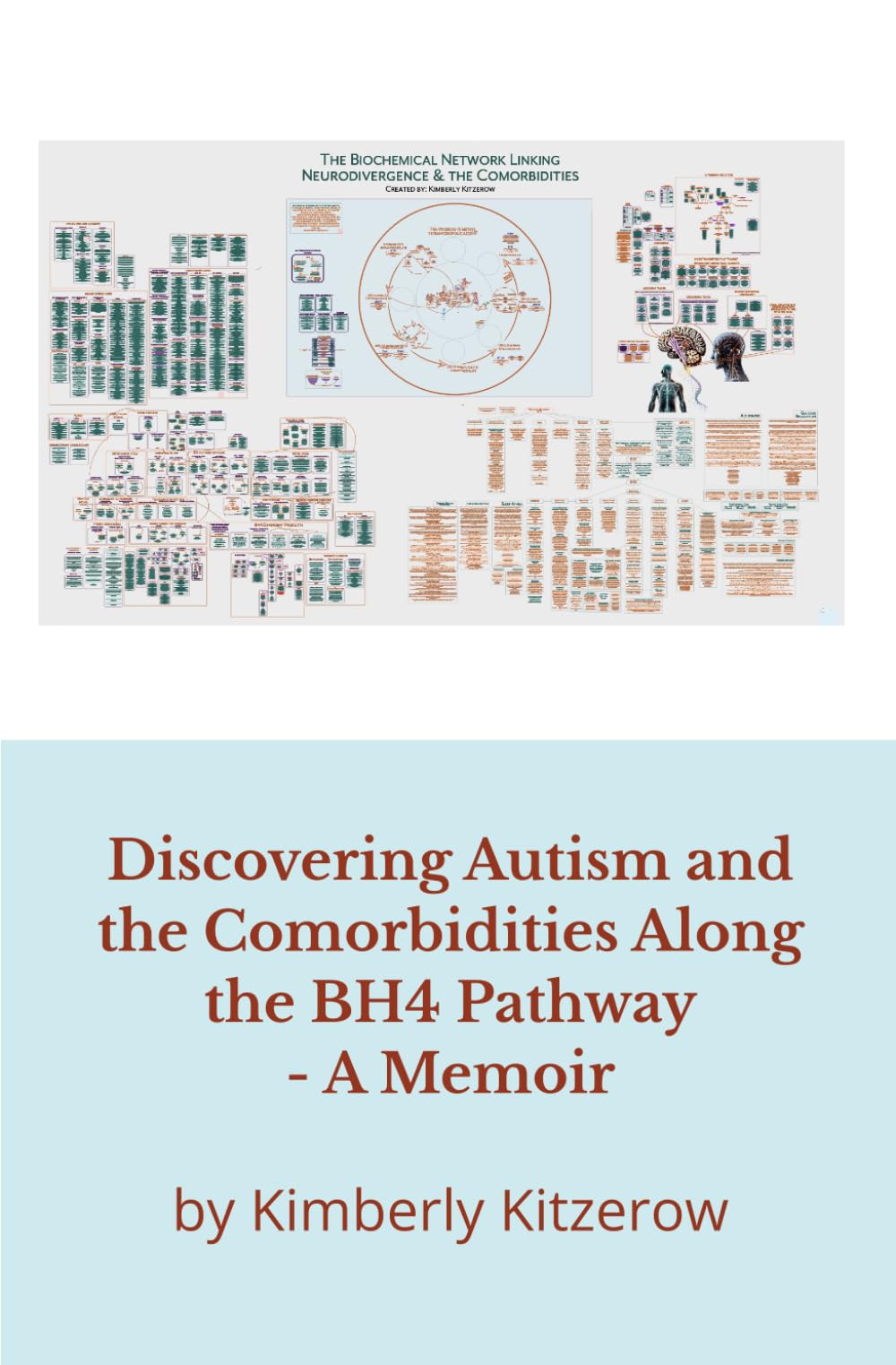
The Discovery
Follow the experience of helping a nonverbal autistic child develop speech—and the questions, observations, and discoveries that led to the larger body of work.
Choose the path that makes sense for you.
Go directly to the information most relevant to what brings you here.
Understand how the body of work developed
Each stage grew from a question raised by the work before it. Follow the chronology to see how the learning system led to the current biological model.
- NeuroToggle®: How does learning change the brain? The work began with teaching. NeuroToggle connects established strategies with five kinds of neural-circuit change: Build, Strengthen, Expand, Time, and Replace.
- January 2024 initial BH4 hypothesis: Could the conditions be connected? The first biological hypothesis asked whether autism and recurring systemic comorbidities could converge through BH4-dependent pathways rather than represent unrelated findings. It established a testable biochemical starting point, not a final conclusion.
- Jigsaw Puzzle Methodology™: How can the proposed pattern be tested? The method maps biomarkers by their known functions and relationships—where they act, what they interact with, and whether their direction fits the proposed upstream and downstream mechanism. It supports functional pathway inference; quantitative and experimental work is still needed to measure how strongly those relationships operate in vivo.
- Genomic/Proteomic Regulation + BioToggle®: What regulates the larger system? This stage connected physiological conditions with gene regulation, protein availability, pathway activity, and observable traits. BioToggle organizes that regulation across five mutually interacting domains rather than treating each body system independently.
- BH4 Shunt: Where might biochemical activity shift? The BH4 Shunt proposes that certain allostatic conditions change relative activity across BH4-dependent pathways. Autism-associated biomarkers were mapped to their functional positions to test whether their observed directions were compatible with the proposed redistribution; direct flux measurement remains an important next step.
- BioToggle®/BioDial® Categorical Delineation: Why does timing matter? The framework added duration and biological timing. A regulatory change may have different effects depending on when it occurs, how long it lasts, and the state of the connected system at that time.
- Autism and the Comorbidities Cascade: How do the pieces fit together? The Cascade integrates genetic and epigenetic factors, regulatory responses, protein and pathway activity, biological timing, neural development, and systemic physiology into one proposed directional architecture. Its components have different levels of evidentiary support, and the complete causal sequence still requires further testing.
- The memoir: What is the story behind the work? The memoir documents the experiences, questions, missteps, and reasoning that led from helping one child learn to speak to developing the larger body of work. It provides context and chronology, not biological validation.
Systems for Understanding Neurodivergence
BioToggle® and BioDials® organize the proposed biological relationships. NeuroToggle® organizes established teaching strategies around neural-circuit change. Together, they connect biological understanding with practical skill development.
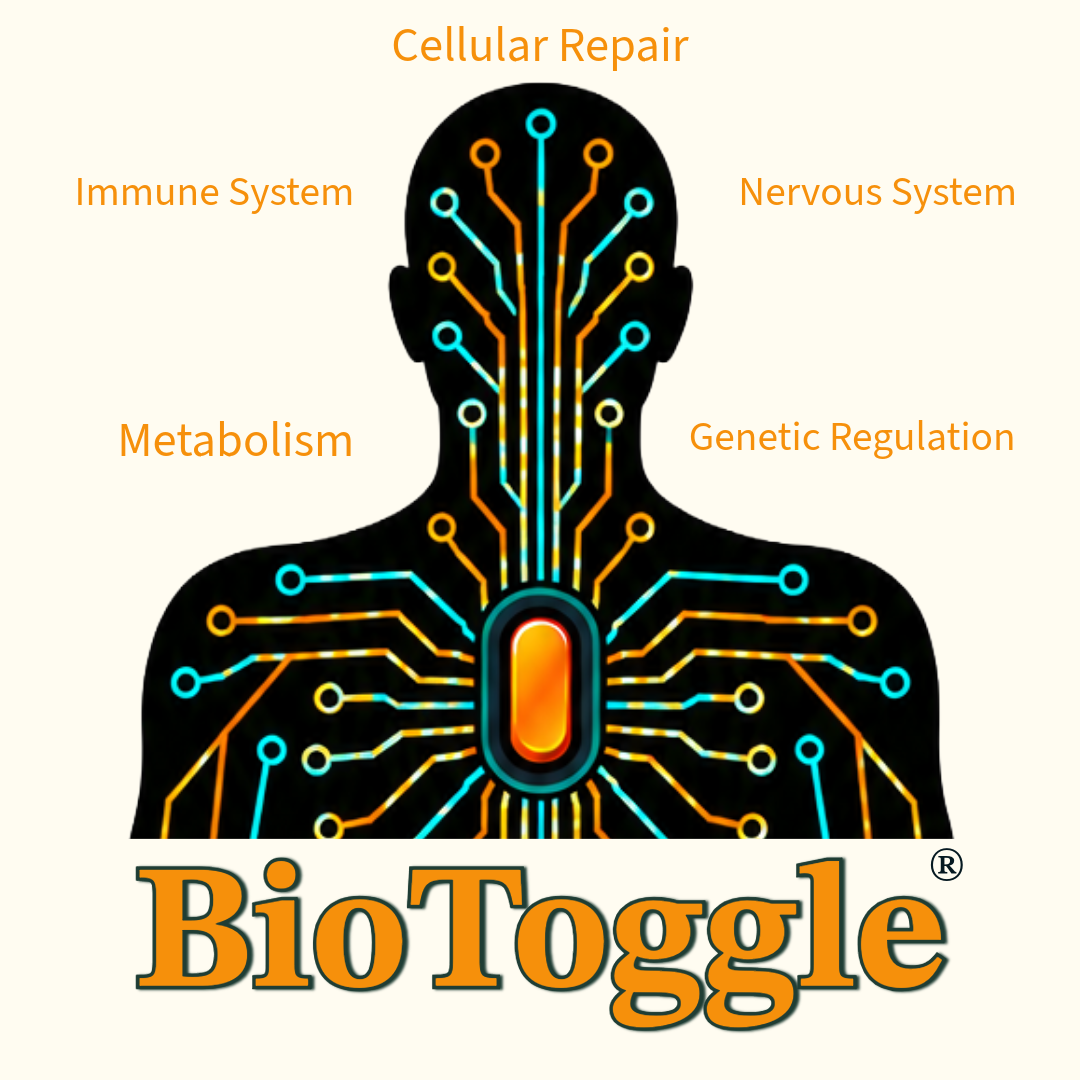
BioToggle® + BioDials®
Maps the regulatory and temporal systems associated with autism traits, comorbid traits, their clustering, and differences across phenotypes.
- Regulatory domains: immune system, metabolism, cellular repair, nervous system, and genetic regulation
- Temporal domains: ultradian, circadian, circannual, developmental, and age
- Shows how system interactions and timing may change physiological outcomes
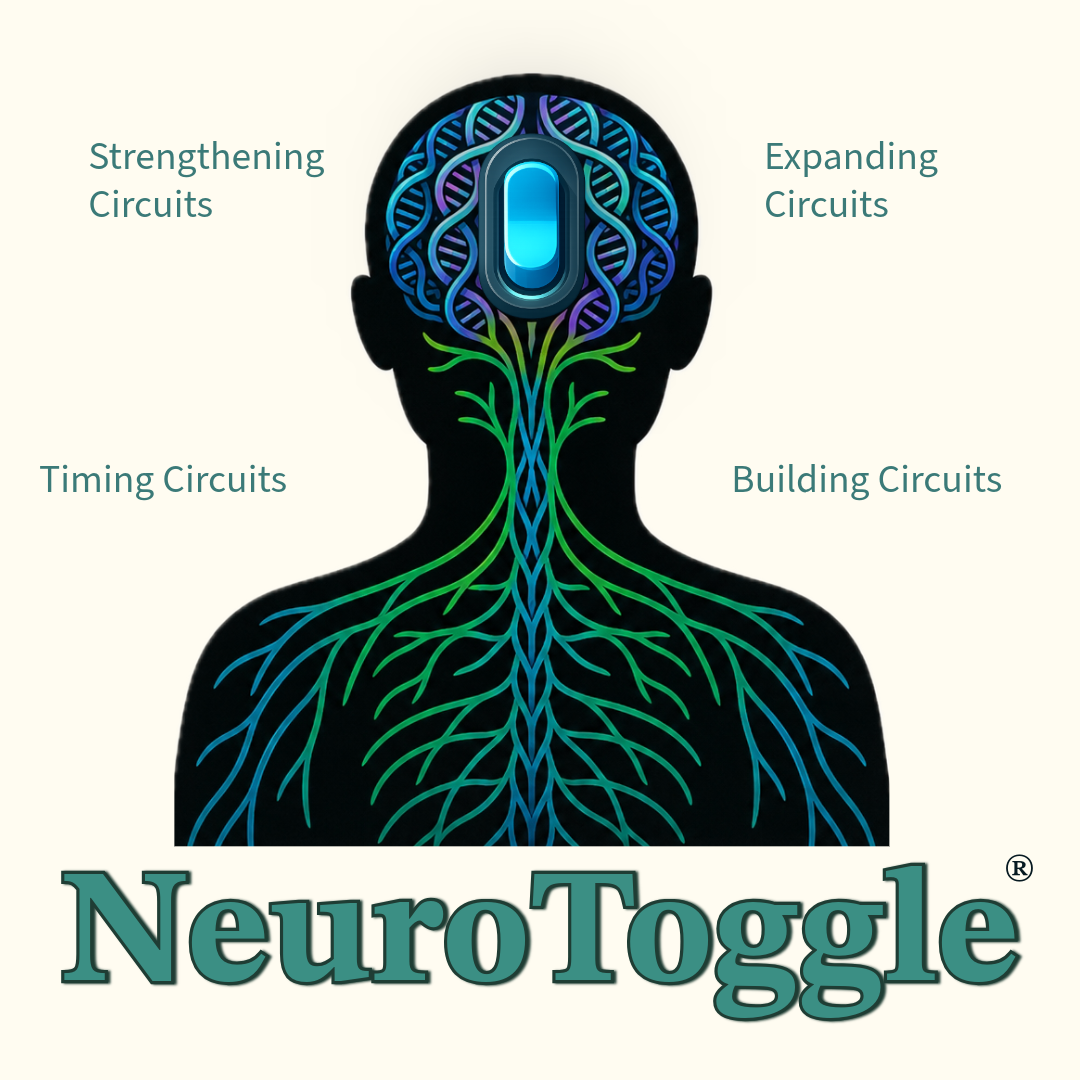
NeuroToggle®
Links established teaching strategies to the kind of neural-circuit change a learner needs.
- Build new neural-circuit connections when a skill or behavior has not yet been established
- Strengthen and expand developing networks so skills become more consistent and can be used in more settings
- Use timing strategically, or replace a harmful response with a functional replacement behavior
How They Connect
BioToggle®
Explains the proposed regulatory biochemistry underlying differences in neural-circuit development, autism traits, comorbid traits, and their clustering.
NeuroToggle®
Applies established teaching strategies to the Build, Strengthen, Expand, Time, or Replace change a developing skill or behavior may need.
Follow the Validation and Converging Evidence
Track the model from its original publication through validation, independent alignment, and a growing body of converging evidence.
Follow the Work in Chronological Order
The progression is:
- NeuroToggle®The educational system Kitzerow built to help her nonverbal autistic daughter talk, build skills and behaviors, and implement replacement behaviors. It links established teaching strategies to categories of neural-circuit change.
- Autism & the Comorbidities Along the BH4 PathwayThe January 2024 initial hypothesis connecting autism and recurring comorbidities through BH4-dependent biochemistry.
- The Jigsaw Puzzle MethodologyThe systems-analysis method developed to test that hypothesis against a species-level biochemical reference constructed from gene-coded protein functions.
- Genomic and Proteomic Regulation in Cellular Homeostasis and BioToggle®Development of the relationships among cellular state, epigenetic and proteomic regulation, protein activity, and physiological traits.
- The BH4 Pathway as an Allostatic MechanismDevelopment and testing of the BH4 Shunt as a proposed redox-sensitive redistribution mechanism.
- BioToggle and BioDial Categorical DelineationExtension of the regulatory model to state, duration, biological timing, and physiological outcome.
- Neurodivergent Biochemistry and the Autism and the Comorbidities Theory and the current Autism and the Comorbidities CascadeIntegration of the preceding components into an autism-specific directional biochemical cascade.
- Kitzerow’s ADHD ModelApplication of the systems framework to stress-response regulation, catecholamine availability and turnover, and the neural circuitry involved in attention, motivation, executive functioning, reward, and behavioral regulation.
- The memoirDocumentation of the chronology and reasoning through which the work developed. It is relevant to provenance and development of the ideas, rather than serving as biological validation.
Kimberly Kitzerow
Kimberly Kitzerow is an educator specializing in data synthesis and a neurodivergent advocate. Her work began while searching for answers and practical ways to support her nonverbal autistic daughter.